
Prevent Dead Spots in Composite and Alloy Bats
Table of Contents
- What Causes Dead Spots in Baseball Bats
- How to Tell If a Baseball Bat Has a Dead Spot
- Composite vs Alloy Baseball Bats: Durability and Dead Spot Risk
- Cold Weather and Bat Performance: Why Temperature Matters
- Baseball Bat Care and Maintenance to Prevent Dead Spots
- Using Heat to Prevent Dead Spots and Maintain Performance
- Inspection and Testing Protocols for Specialty Stores
- Conclusion
- Frequently Asked Questions
Last Updated: October 5, 2026
What Causes Dead Spots in Baseball Bats
Dead spots occur when a barrel loses responsiveness and can't transfer energy efficiently to the ball. The primary cause is temperature: cold contracts the materials inside the bat, reducing barrel flex and trampoline effect. Composite bats are hit hardest because they rely on resin bonds between carbon fiber layers for their pop.
Composite resin turns brittle in low temperatures, while cold metal contracts and can't deform and spring back on impact. Both materials experience "dead spots", zones where the sweet spot shrinks and contact feels flat.
Manufacturing defects can also create dead spots: internal rings or structural inconsistencies compromise energy transfer at specific points. But the most preventable cause is environmental stress; repeated cold exposure plus impacts accelerates material fatigue.
How to Tell If a Baseball Bat Has a Dead Spot
Specialty-store staff need a repeatable procedure they can run on a trade-in, a return, or a floor model in under two minutes.
Step 1, Set a baseline. Note the bat's material, model year, and prior use.
Step 3, Two-point flex check. Support the barrel horizontally at two points roughly 15 cm apart, centered on the suspect zone, and press gently at the midpoint.
Step 4, Visual and tactile pass. Look for lengthwise hairline cracks, resin separation at composite layer edges, dents or flat spots on alloy, and discoloration suggesting heat or impact stress.
Step 5, Document and tag. Record the serial or model number, test date, tester's initials, and which zones flagged.
What each result means for the sales floor
| Result | Likely meaning | Recommended action |
|---|---|---|
| Uniform tone, even flex, no visual flags | No obvious issue | Sell or return to play; note test date |
| One dull zone, even flex | Possible dead spot or internal defect | Flag for manager review; do not sell as new |
| Localized stiffness on flex test | Possible structural issue | Hold from sale; consider warranty referral |
| Cracks, separation, or dents | Structural compromise | Remove from play; do not sell |
A common pattern is that the same model flags repeatedly after a cold-weather tournament season.
Composite vs Alloy Baseball Bats: Durability and Dead Spot Risk
Composite and alloy barrels don't fail the same way, and the difference matters on the sales floor.
Composite barrels. The common failure mode is resin fatigue. Composite barrels can also fail suddenly; one that passed a sound test in March can crack in April, so staff should never promise a composite bat will stay healthy through a full season.
Alloy barrels. Alloy is more temperature-stable and resistant to impact fatigue, but it dents, changing the barrel's geometry and creating a stiff or dead zone around it.
Hybrid barrels. A hybrid bat pairs a composite handle or inner layer with an alloy barrel, or the reverse.
What this means for durability claims. Composite bats offer a larger sweet spot and higher peak performance in warm conditions, but are more sensitive to cold and cumulative impact.
Practical guidance for specialty stores
- Ask the customer where and when the bat is used. Cold-weather early-season play pushes composite risk up; year-round mild conditions reduce it.
- For composite returns, document the storage history and the temperatures the bat was exposed to. That context supports a warranty claim and helps the customer understand the outcome.
- For alloy returns, photograph the dent or flat spot before the bat leaves the store. A dated photo is the most useful piece of evidence in a warranty conversation.
- Do not tell a customer that a composite bat "cannot" develop a dead spot, or that an alloy bat "will not" dent. Both statements are wrong and both create returns.
A useful framing for customers: composite bats are tuned for peak performance in a narrower window, while alloy bats trade peak pop for consistency. That single sentence explains most dead-spot questions staff hear at the counter.
Cold Weather and Bat Performance: Why Temperature Matters
Temperature directly affects how composite and alloy bats perform. Cold reduces the barrel's ability to flex and transfer energy. The colder the temperature, the more pronounced the effect.
The science is straightforward. Materials contract in cold: composite resin becomes less elastic, metal becomes stiffer. Both reduce the trampoline effect, the barrel's ability to compress and spring back on impact.
Humidity also plays a role. Composite bats absorb moisture from humid air, which can soften the resin and improve performance. Cold, dry conditions are worst for composites; low temperature plus low humidity maximizes dead spot risk.
For players, the practical impact is clear: a bat that feels great indoors will feel sluggish in a cold outdoor game. The ball doesn't jump off the barrel, contact feels flat, and hitters compensate by swinging harder, increasing the risk of weak contact and strikeouts.
Baseball Bat Care and Maintenance to Prevent Dead Spots
Proper storage is the foundation of dead spot prevention. Store bats indoors at room temperature, ideally between 18-24°C. Avoid leaving bats in cars, garages, or outdoor equipment bags overnight, especially during cold seasons. Temperature fluctuations accelerate material fatigue and increase dead spot risk.
Apex Hardball Heated Bat Warmer →
Rotation matters for composite bats. Using the same bat repeatedly creates stress on specific barrel zones; rotating between bats distributes impact stress more evenly and extends the life of each. Teams with multiple composite bats benefit most.
Inspect bats regularly for cracks, separation, or discoloration, and for dents or bends on alloy. Catching problems early prevents them from developing into dead spots. A 30-second visual check can save money on premature replacement.
Avoid extreme temperature swings. Don't move a bat straight from a cold garage into a warm locker room; rapid change stresses the materials. Let bats acclimate gradually between environments.
Here's a maintenance checklist for specialty store staff:
- Inspect barrel for cracks or separation weekly
- Check for dents or compression damage
- Test sweet spot with sound test monthly
- Verify storage temperature stays between 18-24°C
- Rotate composite bats in inventory to prevent stress concentration
- Document any customer returns related to performance issues
- Educate customers on proper storage at point of sale
Using Heat to Prevent Dead Spots and Maintain Performance
Heat is the most direct solution to cold-weather dead spot prevention. Warming the barrel restores flexibility to composite resin and reduces the stiffness cold introduces to alloy metals.
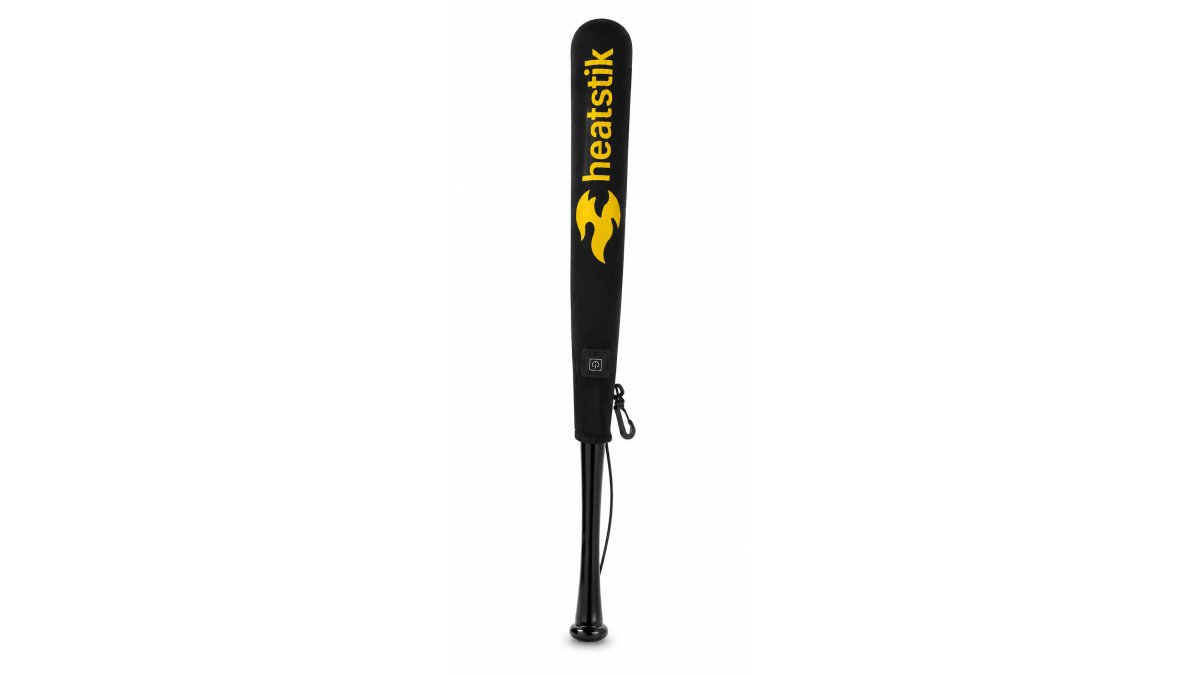
The Heatstik heated bat warmer is specifically designed to solve this problem. The USB-powered heating pad wraps around the barrel and maintains optimal temperature between swings.

For composite bats especially, maintaining barrel temperature is a game-changer. A composite bat warmed to 21°C will outperform the same bat at 4°C by a measurable margin.
Alloy bats benefit too. While alloy is more temperature-stable than composite, even a 8-11°C difference affects performance. Keeping the barrel warm ensures consistent exit velocity across all at-bats, regardless of outdoor conditions.
The workflow is simple: between innings or during timeouts, slip the bat into the warmer. The heating pad activates and the neoprene outer layer prevents heat loss.
Inspection and Testing Protocols for Specialty Stores
Specialty store staff play a critical role in educating customers about dead spots and prevention.
Sound Test Protocol: Tap the barrel at three points: upper barrel, middle barrel, and lower barrel near the taper. Document the sound quality at each.
Flex Test Protocol: Support the bat horizontally on two points (near the knob and near the end cap). Apply gentle downward pressure to the barrel midpoint. Observe the flex pattern.
Customer Education at Point of Sale: When customers purchase composite bats, explain the cold-weather risk. Provide storage recommendations. Mention that heat maintenance, like the Heatstik heated bat warmer, can preserve performance throughout cold-season play.
Warranty and Return Documentation: Track customer returns related to performance issues, noting whether the bat was stored improperly or used in cold conditions. If a model shows repeated dead spot complaints in cold weather, adjust your stocking strategy or customer guidance.
Staff Training: Train staff to recognize dead spots through sound and feel. Practice the testing protocols together. Consistency matters. When customers get the same assessment from every staff member, trust builds.
Conclusion
Dead spots in composite and alloy bats are preventable. Understanding the causes, primarily cold temperature and material fatigue, puts you in control. Proper storage, regular inspection, and heat maintenance ensure your equipment performs at peak level throughout the season.
For specialty stores, educating customers on these practices builds loyalty and reduces returns. For players and coaches, implementing these strategies directly improves performance during cold-weather play. The Heatstik heated bat warmer offers a practical, portable solution that maintains barrel temperature and responsiveness, no matter the conditions. With its USB-powered heating system and 30,000mAh fast-charging power bank, it's designed for teams and players who refuse to let cold weather compromise their equipment. VIEW OUR HEATSTIK ASSORTMENT and ensure your bats stay game-ready all season long.

Frequently Asked Questions
Can warming a bat prevent dead spots?
Warming a bat cannot reverse an existing dead spot, but it can help prevent new ones from forming in cold weather. Cold temperatures cause composite and alloy materials to contract and become less responsive, increasing the risk of structural failure that leads to dead spots. By maintaining optimal barrel temperature during cold-weather play, you preserve the material's flex and impact absorption properties. This is especially critical for composite bats, where resin and carbon fiber are more susceptible to cold-induced damage. A heated bat sleeve keeps the barrel at a consistent temperature between swings, reducing thermal stress on the barrel construction.
What's the difference between dead spots in composite and alloy bats?
Composite bats develop dead spots when the resin binding carbon fiber layers breaks down, usually from impact, material fatigue, or cold exposure. The barrel loses its trampoline effect and flex, creating a visible loss in performance. Alloy bats develop dead spots through internal structural failure; the lightweight alloy material fatigues after repeated impacts, creating tiny fractures that reduce energy transfer at the sweet spot. Composite bats are more vulnerable to cold-weather dead spots because resin becomes brittle in low temperatures, while alloy bats are more prone to dead spots from repeated use over time. Both require protection, but through different mechanisms: composites need temperature stability, and alloys need impact management.
How often should I inspect my bats for dead spots?
Inspect bats before and after every tournament or heavy-use period, and monthly during regular season play. For composite bats in cold weather, check weekly if you're playing multiple games in low temperatures. Visual inspection takes 30 seconds: look for cracks, dents, or discoloration on the barrel. Listen for changes in sound during practice swings; a dull thud instead of a sharp crack indicates a potential dead spot. If you notice a sudden drop in exit velocity or inconsistent contact at the sweet spot, have the bat professionally evaluated. Early detection prevents a partially damaged bat from becoming completely unusable and protects player safety.
Is a heated bat warmer worth the investment for a few cold games?
Yes, especially for high-end composite bats. A single premium composite bat costs $300-500, and a dead spot renders it unusable. A heated bat warmer at $129.99 or $149.99 protects that investment across multiple seasons. Even if you play only 4-5 cold games annually, the risk of losing bat performance during critical early-season tournaments justifies the cost. The Heatstik Heated Bat Warmer also includes a 30,000mAh fast-charging power bank that charges mobile devices, adding utility beyond bat warming. For teams and coaches managing multiple bats, one warmer can protect several bats across a season. The real value is consistency: stepping into the batter's box with a warm, responsive bat every single game.