
How to Prevent Composite Bat Cracking
Table of Contents
- Why Composite Bats Crack: Understanding the Root Causes
- Composite Bat Cold Weather Performance: The Temperature Challenge
- How to Break in a Composite Bat Correctly
- Signs of a Cracked Composite Bat: Visual Inspection Guide
- Storage Best Practices to Prevent Composite Bat Cracking
- Maintenance and Cleaning Routines for Long Bat Life
- Warming Your Bat Before Cold-Weather Games
- When to Retire a Cracked Bat
- Frequently Asked Questions
Last Updated: September 30, 2026
Why Composite Bats Crack: Understanding the Root Causes
Composite bats crack because resin weakens under stress, especially in cold weather. Understanding why helps you prevent composite bat cracking.
Composite bats are made of carbon fiber wrapped in resin. When you hit a ball, the barrel compresses and fibers flex. If resin degrades, fibers separate, a process called delamination, and cracks spread fast.
Cold temperatures make resin brittle and less flexible, causing fibers to snap under swings that would normally compress the barrel safely.
Temperature sensitivity and thermal degradation
Cold hardens resin, reducing barrel flex and the fibers' ability to absorb impact energy. Instead of bending, they fracture.
Most composite bats lose responsiveness below 15°C; below 5°C, cracking risk jumps significantly.
Early-season cold-weather games are risky: a bat stored in a cold car or bag can crack with one full-power swing.
Impact force and structural stress
Harder swings compress the barrel more. In warm weather, resin absorbs and releases this energy; in cold weather, resin can't flex enough, so fibers take the full force.
Hard balls concentrate impact force in one spot, increasing cracking risk in cold conditions; soft balls spread impact over a larger area.
Two-piece bats are more prone to cracking than one-piece alloy bats because stress concentrates at the barrel-handle junction, especially in cold.
Composite Bat Cold Weather Performance: The Temperature Challenge
Cold degrades performance (reduced compression, lower exit velocity, shrinking sweet spot) and increases cracking risk simultaneously.
How cold reduces barrel responsiveness
Barrel compression stores energy that releases as the bat snaps back, creating high exit velocity.
Cold stiffens resin, reducing flex and compression, weakening energy release. Hitters notice the ball feels dead off the bat.
Performance degrades below 15°C; by 5°C, exit velocity drops noticeably and the sweet spot shrinks.
Resin fatigue and fiber delamination in freezing conditions
Resin fatigue occurs when repeated swings create tiny cracks. In cold weather, resin can't repair itself, so cracks accumulate.
Fiber delamination occurs when cold weakens the resin-fiber bond. A hard swing peels fibers away, and the damage spreads quickly.
Cracked bats often fail suddenly because damage builds invisibly until one swing breaks through the threshold.
How to Break in a Composite Bat Correctly
New composite bats need a break-in period because uncured resin and unsettled fibers can't handle hard swings without permanent damage.
Break in composite bats over 150-300 swings, starting at 50% power and gradually increasing intensity to allow resin to cure and fibers to settle.
The break-in period timeline and swing guidelines
Week 1: 50 swings at 50% power. Focus on making solid contact in the sweet spot. Avoid off-center hits.
Week 2: 50 swings at 75% power. Increase bat speed slightly. Still focus on the sweet spot.
Week 3: 50 swings at 90% power. You're close to full intensity now.
Week 4: 50 swings at full power. The bat is ready for game play.
Adjust timeline based on swing frequency: compress if swinging daily, extend if swinging once weekly.
Never break in a composite bat in cold weather; warm conditions cure resin faster. Wait until spring or break in indoors.
Avoiding premature cracking during the break-in phase
The most common mistake is swinging too hard too soon. New bats are stiff and uncured, so hard swings cause spider webbing or cracks before break-in completes.
Off-center hits during break-in concentrate stress at the hit spot, causing localized cracking.
HeatStik Softball Heated Bat Warmer →
Use a softer practice ball during break-in if possible. Soft balls transfer less impact force. They give the resin time to cure without extreme stress. Once the break-in period is complete, switch to game balls.
Signs of a Cracked Composite Bat: Visual Inspection Guide
Spot damage early: small cracks grow fast, so early detection lets you retire the bat safely.
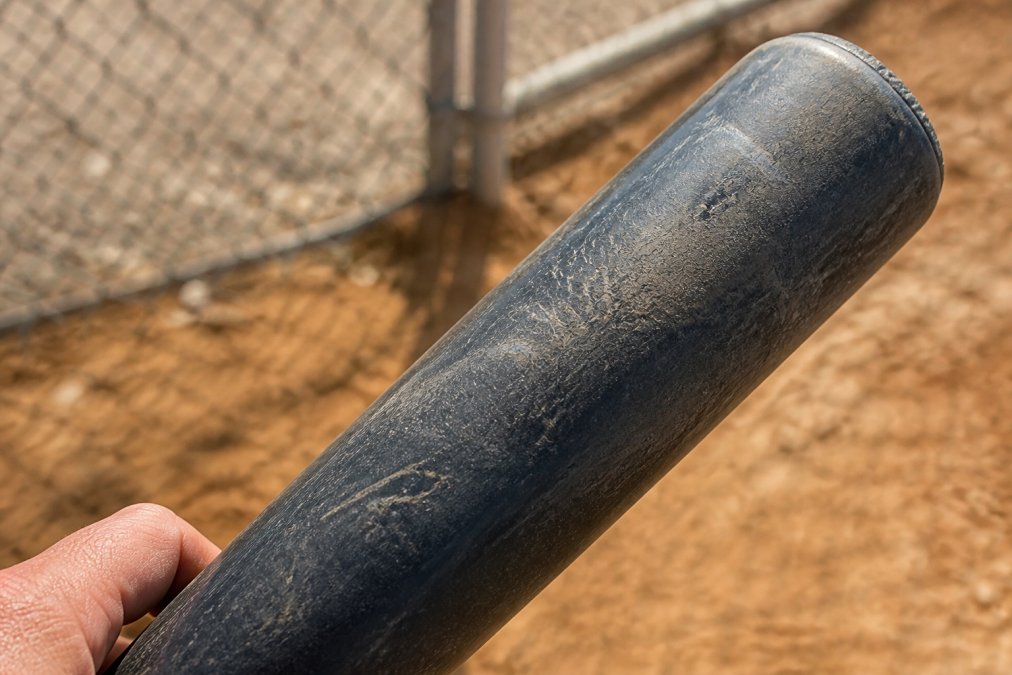
Spider webbing and hairline fractures
Spider webbing appears as thin cracks radiating from a center point. They start small but grow with each swing.
Hairline fractures run along the barrel length. Rotate the bat in good light to spot thin dark lines parallel to the bat.
Both types of cracks compromise structural integrity. Continuing to swing risks sudden failure mid-swing.
Performance indicators that signal structural damage
Bats with internal damage show shrinking sweet spots and dead off-center hits.
A dull thud instead of a crack sound indicates the barrel isn't flexing properly, resin has separated from fibers.
A softer or mushier feel indicates uneven barrel compression from delamination.
If you notice any of these signs, inspect the bat carefully. Look for visible cracks. If you find any, retire the bat. A cracked bat can fail suddenly, creating a safety hazard.
Storage Best Practices to Prevent Composite Bat Cracking
Where you store your bat matters as much as how you use it. Poor storage accelerates damage. Smart storage extends bat life significantly.
Composite bats are sensitive to temperature and humidity. Extreme conditions stress resin; moisture causes swelling and delamination; temperature swings create internal stress.
Indoor versus garage and trunk storage
Indoor storage is ideal: stable temperature and moderate humidity minimize stress.
Garage storage is acceptable but not optimal due to larger temperature swings and humidity spikes. Use a climate-controlled area if possible.
Moisture exposure and humidity control
Moisture is the enemy of composite bats. Water seeps into the resin. It causes swelling. The swollen resin puts stress on the fibers. Over time, this causes delamination.
Maintenance and Cleaning Routines for Long Bat Life
Regular maintenance prevents damage before it happens. Clean your bat after every use. Inspect it weekly. Address small issues before they become big problems.
Post-game care protocols
Wipe down your bat immediately after games. Use a soft, dry cloth. Remove dirt, sweat, and moisture. Pay special attention to the barrel where impact occurs.
Cleaning without causing damage
Use only soft cloths. Abrasive materials scratch the surface. Scratches let moisture in. They also weaken the resin.
Warming Your Bat Before Cold-Weather Games
Pre-game warming is the most effective way to prevent composite bat cracking in cold weather. A warm bat performs better and cracks less easily.
Why pre-game bat warming matters
A warm barrel flexes more. The resin softens. The fibers become more flexible. The barrel compresses more during impact. This increases exit velocity and shrinks the sweet spot.
Using a heated bat sleeve for consistent performance
A heated bat sleeve solves the problem of moving between warm and cold environments. You warm the bat before the game. The sleeve keeps it warm between swings.
When to Retire a Cracked Bat
A cracked bat is unsafe. It can fail suddenly mid-swing. The barrel can separate from the handle. Fragments can fly toward the pitcher or catcher.
| Prevention Method | Best For | Effort Level | Effectiveness |
|---|---|---|---|
| Indoor storage | Year-round protection | Minimal | High |
| Pre-game warming | Single games | Low | High |
| Heated bat sleeve | Tournaments and cold climates | Moderate | Very High |
| Proper break-in | New bats | Moderate | High |
| Regular maintenance | Long bat life | Low | Moderate |
Frequently Asked Questions
Does cold weather increase the risk of composite bat cracking?
Yes. Cold temperatures reduce the flexibility of composite fibers, making them more brittle and prone to cracking on impact. When composite bats are exposed to freezing conditions, resin fatigue accelerates and the material loses its ability to absorb vibration. This is why many players experience cracked bats during early spring or late fall tournaments. Warming your bat before games can significantly reduce this risk and maintain the structural integrity of the barrel.
What is the typical lifespan of a composite bat?
A well-maintained composite bat typically lasts 1-2 years of regular play, though this varies based on swing speed, ball hardness, and storage conditions. High-impact play with a heavy swing speed can shorten the lifespan considerably. Proper break-in procedures, correct storage away from extreme temperatures, and regular maintenance can extend the life of your bat. Bats stored in temperature-controlled environments and used with appropriate ball compression tend to last longer than those exposed to temperature swings and moisture.
What happens if you don't break in a composite bat properly?
Skipping or rushing the break-in period significantly increases the risk of premature cracking. Composite fibers need gradual conditioning to reach peak performance and durability. Without proper break-in, the resin matrix hasn't fully cured and the fibers haven't aligned properly, leaving the bat vulnerable to spider webbing and structural failure. A correct break-in involves hitting 150-500 balls at 50-75% swing intensity over several weeks, allowing the composite material to settle and strengthen before full-power use.
Can you still use a cracked composite bat?
Using a cracked composite bat is risky and not recommended. Hairline fractures and spider webbing compromise structural integrity and can worsen with each swing. A cracked bat loses responsiveness, reduces exit velocity, and may fail completely during play, potentially causing injury. Most leagues and tournaments require bat inspection before games and may prohibit bats with visible cracks under USSSA regulations. If your bat shows signs of cracking, it's time to retire it and invest in a replacement to maintain consistent performance and safety.