
Is Playing Baseball in Freezing Weather Worth It?
Table of Contents
- How Cold Temperatures Change Baseball
- Cold Weather Baseball Bat Performance: What the Data Shows
- Baseball Injury Prevention in Cold Weather
- How to Keep Baseball Bats Warm
- Nutrition and Hydration for Cold-Weather Play
- Game Cancellation Policies and Temperature Thresholds
- Indoor Training Alternatives for Cold Climates
- Frequently Asked Questions
Last Updated: September 20, 2026
How Cold Temperatures Change Baseball
Whether playing baseball in freezing weather is worthwhile comes down to one condition: players, parents, and coaches must treat cold as a performance variable rather than an inconvenience. Cold air reduces muscle contraction efficiency, tightens joints, and stiffens bat materials – changes that are measurable and largely preventable with the right preparation.
Cold Weather Baseball Bat Performance: What the Data Shows
Bat performance in cold weather is the most misunderstood part of the equation. Cold air doesn't make bats "dead"; the ball loses elasticity, the bat's material stiffens, and the combination produces less exit velocity.
Composite vs. Alloy Bats in the Cold
Alloy bats handle cold better than most players assume. Aluminum does not shatter in freezing temperatures, and its performance stays relatively consistent. The trade-off is feel: alloy bats vibrate more on mishits, and cold hands amplify that sting.
Equipment Maintenance in Cold Conditions
Cold also shortens equipment life.
- Composite bats: Store them indoors before and after games. Never leave them in a car overnight in freezing conditions.
- Gloves: Leather stiffens and cracks when cold. Condition gloves before the season and keep them in a bag, not on the bench.
- Balls: Cold baseballs lose rebound. Keep game balls in an insulated bag until they're needed.
- Cleats: Plastic cleats become brittle. Check for cracks before cold-weather games.
Baseball Injury Prevention in Cold Weather
Baseball injury prevention in cold weather starts with accepting that your body is not ready when the first pitch is thrown. Cold muscles generate less force, react more slowly, and tear more easily under sudden load.
Warm-Up Routines for Freezing Temperatures
A cold-weather warm-up should take longer than a warm-weather one, not the same time compressed. Build in 15 to 20 minutes before game time.
- Raise core temperature first. Five to eight minutes of jogging, jumping jacks, or dynamic movement until you're lightly sweating.
- Dynamic stretching, not static. Leg swings, arm circles, torso rotations, and walking lunges. Save static holds for after the game.
- Sport-specific activation. Band work for the rotator cuff, light swings with a weighted bat, and short toss before full-distance throwing.
- Progressive throwing. Start at 15 meters, work out to 40, then to full distance. Never skip the intermediate steps in cold air.
- Re-warm between innings. This is the step most players skip entirely.
Post-Game Recovery Protocols
Recovery in cold weather takes longer, and skipping it compounds over a season.
- Cool down gradually. Don't sprint from the field to a warm car. Ten minutes of light movement prevents stiffness from setting in.
- Change out of damp layers immediately. Moisture-wicking base layers only work when they're dry. Wet clothing pulls heat away from the body fast.
- Stretch while warm. Static stretching immediately post-game, while muscles are still warm, reduces next-day stiffness.
- Hydrate and refuel. Cold suppresses thirst, so players drink less than they need. Set a reminder if necessary.
How to Keep Baseball Bats Warm
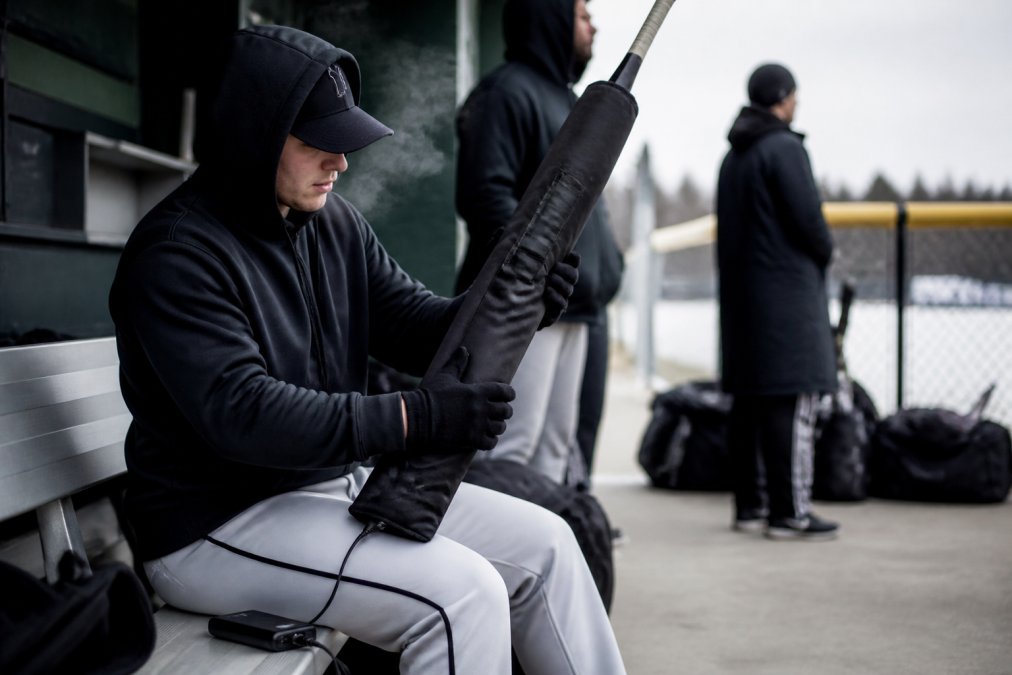
Keeping a bat warm is about protecting the material, not making it feel nicer in your hands. A bat stored at room temperature and exposed to freezing air for 30 minutes will cool significantly; one kept warm between at-bats holds its performance characteristics far longer.
Nutrition and Hydration for Cold-Weather Play
Cold weather changes what your body needs, and most players get this wrong in both directions. They drink less because they don't feel thirsty, and eat less because they don't feel hungry. Both are mistakes with a physiological explanation.
Why Cold Changes Fuel Needs
When the body is exposed to cold, it increases metabolic rate to maintain core temperature. Shivering alone can multiply resting energy expenditure several times over, and even without visible shivering, the body burns extra calories to keep deep tissues warm. For a player standing in a dugout for two hours in near-freezing conditions, that background burn adds up.
Hydration in Cold Air
Hydration matters as much in cold air as in heat, for two reasons. First, breathing cold, dry air increases fluid loss through respiration, visible as breath vapor. Second, players still sweat under layers, and that sweat is often invisible because it evaporates into dry air or is absorbed by base layers. Players finish a cold game mildly dehydrated without ever feeling thirsty.
VIEW OUR HEATSTIK ASSORTMENT →
What to Eat and Drink
Prioritize slow-release carbohydrates before the game, such as oatmeal, whole-grain bread, rice, or a banana with nut butter, so blood glucose stays stable through the cold. Between innings, something warm and easily digestible beats a cold sports drink because it raises core temperature while delivering fluid and electrolytes.
- Warm broth or soup in a thermos. Delivers fluid, sodium, and heat in one step.
- Warm tea with a small amount of honey. Easy on the stomach and provides quick carbohydrate.
- Electrolyte mix in warm water. Better tolerated than cold drinks in freezing conditions.
- Easy-to-eat carbohydrates. Pretzels, crackers, or a granola bar between innings.
A Simple Cold-Game Fueling Timeline
- Two to three hours before first pitch: Balanced meal with slow-release carbohydrates and moderate protein.
- Thirty to sixty minutes before: Small carbohydrate snack and 250-500 mL of fluid.
- Between innings: Sips of warm fluid every half-inning; a small carbohydrate snack if the game runs long.
- Post-game: Warm fluid and a carbohydrate-plus-protein snack within an hour to support recovery and re-warming.
Game Cancellation Policies and Temperature Thresholds
Game cancellation in cold weather is usually a league decision, not a coach's or parent's. Most youth and amateur leagues set a temperature threshold, often combined with wind chill, below which games are postponed. Wind chill matters more than raw temperature because moving air strips heat from exposed skin far faster than still air. A 2°C afternoon with a 30 km/h wind can feel closer to -5°C, and that gap is where most cold-weather injuries happen.
A Go/No-Go Framework for Parents and Coaches
The framework below is not a substitute for your league's written policy. It is a way to make a judgment call when the policy is silent, ambiguous, or when deciding whether to travel to an away game.
| Wind Chill | Player Age | Field Conditions | Recommended Action |
|---|---|---|---|
| Above 5°C | Any | Dry | Play as scheduled |
| 0°C to 5°C | 13+ | Dry | Play with extended warm-up and shortened innings |
| 0°C to 5°C | Under 12 | Dry | Confirm league policy; consider shortening further |
| -5°C to 0°C | 13+ | Dry | Play only with league approval and active re-warming between innings |
| -5°C to 0°C | Under 12 | Dry | Postpone unless league explicitly permits |
| Below -5°C | Any | Any | Postpone; risk outweighs developmental value |
| Any | Any | Rain, ice, or frozen surface | Postpone; field safety overrides temperature |
Three variables drive the call more than raw temperature:
- Wind chill, not air temperature. A still -2°C is more playable than a windy 2°C. Check the forecast wind speed at game time, not the morning low.
- Age and body composition. Younger players have a higher surface-area-to-mass ratio, which means they lose heat faster and re-warm more slowly. A threshold that is fine for a varsity team can be unsafe for a 10U squad.
- Duration and exposure. A seven-inning game with long half-innings and a short bench is very different from a two-hour practice with continuous movement. The longer players sit, the lower the safe threshold.
What to Do When the Call Is Close
When the decision is genuinely borderline, default to the player's long-term development over a single game. A postponed game can be rescheduled; a cold-weather muscle strain or cracked composite bat cannot be undone. Coaches who explain their reasoning, wind chill, age, field condition, build more trust than those who simply cancel or push through.
Indoor Training Alternatives for Cold Climates
Indoor training is the practical answer for players in cold climates who want to keep developing without fighting the weather. Batting cages, indoor facilities, and gym-based strength work preserve swing mechanics and pitching arm health through the winter.
Frequently Asked Questions
How bad does the weather have to be to cancel a baseball game?
Cancellation thresholds vary by league, but many youth and high school organizations call games when temperatures drop below 4°C (40°F) or when wind chill makes it feel like freezing. Rain, snow, and unsafe field conditions also trigger cancellations. Coaches and parents should check their league's specific cold-weather policy, as some allow play down to 0°C with proper gear and modified rules. The priority is always player safety, especially for pitchers and catchers who are most exposed.
How does cold weather affect composite bat performance?
Composite bats lose barrel responsiveness as temperatures drop. The materials stiffen, reducing the trampoline effect that gives composite bats their pop. This can lower exit velocity and make the sweet spot feel smaller. Cold also increases the risk of cracking or delamination in composite bats. Keeping your bat warm before use, such as with a heated sleeve, helps maintain performance and protects your investment. Always follow the manufacturer's temperature guidelines for your specific bat.
What are the risks of playing baseball in freezing temperatures?
Freezing temperatures increase injury risks for players. Cold muscles are less flexible and more prone to strains and tears. Throwing and swinging can lead to shoulder, elbow, and wrist injuries when the body isn't properly warmed up. Hypothermia and frostbite are concerns during long games. Balls become harder and less elastic, raising the chance of hand and forearm stingers. Proper warm-up routines, layered clothing, and between-inning activity are essential to reduce these risks.
How can players maintain bat speed in cold weather?
Maintaining bat speed in the cold requires keeping muscles warm and bats responsive. Players should perform dynamic stretching and light swings before at-bats, wear thermal base layers, and stay active between innings. Keeping your bat warm with a heated sleeve or insulated cover helps preserve barrel performance. Grip the bat with gloves that allow feel. Rotating bats between at-bats can also help, as does storing bats indoors until game time. Consistency in warm-up and gear makes a measurable difference.