
7 Advanced Baseball Training Tools That Boost Performance
Last Updated: October 25, 2026
Quick Summary
Advanced baseball training tools include heated bat warmers, batting tees, weighted bats, radar guns, pitching machines, resistance bands, and rebounder nets that help players practice smarter and track performance gains. These tools range from $20 to $3,000+ CAD and address specific training needs like cold-weather performance, swing mechanics, bat speed, and exit velocity measurement.
- Heated bat warmers maintain bat responsiveness in cold weather and cost $129.99-$149.99 CAD.
- A batting tee and portable net combination covers 80% of individual practice needs for under $250 CAD.
- Radar guns track exit velocity progress and range from $200-$800 CAD depending on features.
- Weighted bats should be 5-10% heavier than your game bat and limited to 2-3 times per week for 15-20 minutes.
- Pitching machines range from $300-$3,000+ CAD and deliver consistent fastballs or breaking balls for team practice.
Table of Contents
- Why Advanced Baseball Training Tools Matter for Cold-Weather Performance
- 1. Heated Bat Warmers: Maintaining Bat Responsiveness in Cold Conditions
- Baseball Hitting Tools: Tees, Nets, and Rebounder Equipment
- Bat Speed Training Equipment: Weighted Bats and Resistance Training
- Exit Velocity Training: Radar Guns and Performance Measurement
- Baseball Pitching Machines: Consistency and Pitch Variety
- Quick Comparison: Matching Tools to Your Training Goals
- Building Your Advanced Training Setup: Where to Start
- Frequently Asked Questions
Why Advanced Baseball Training Tools Matter for Cold-Weather Performance
Cold weather can affect bat performance during early-season tournaments or late-night practices.
That's where advanced baseball training tools come in. The right equipment helps you practice smarter and protects your investment in high-end bats.
This guide covers advanced baseball training tools, from heated bat warmers to radar guns to pitching machines. Whether you're a high school player, a parent protecting composite bats, or a coach managing a travel team, consider which tools match your goals and budget.
| Tool Category | Primary Benefit | Best For | Typical Price Range |
|---|---|---|---|
| Heated Bat Warmers | Maintains bat responsiveness in cold | Cold-weather players | $129.99-$149.99 CAD |
| Batting Tees & Nets | Consistent hitting practice | Solo practice sessions | $50-$300 CAD |
| Weighted Bats | Swing speed and rotational power | Strength training | $80-$200 CAD |
| Radar Guns | Exit velocity measurement | Performance tracking | $200-$800 CAD |
| Pitching Machines | Pitch consistency | Team practice | $300-$3,000+ CAD |
| Resistance Bands | Arm care and shoulder strength | Off-season conditioning | $20-$100 CAD |
| Rebounder Nets | Fielding and reaction drills | Individual skill work | $100-$400 CAD |
1. Heated Bat Warmers: Maintaining Bat Responsiveness in Cold Conditions
Heatstik heated bat warmers are designed to help maintain bat responsiveness in cold weather. The product listing describes warming the bat between swings.
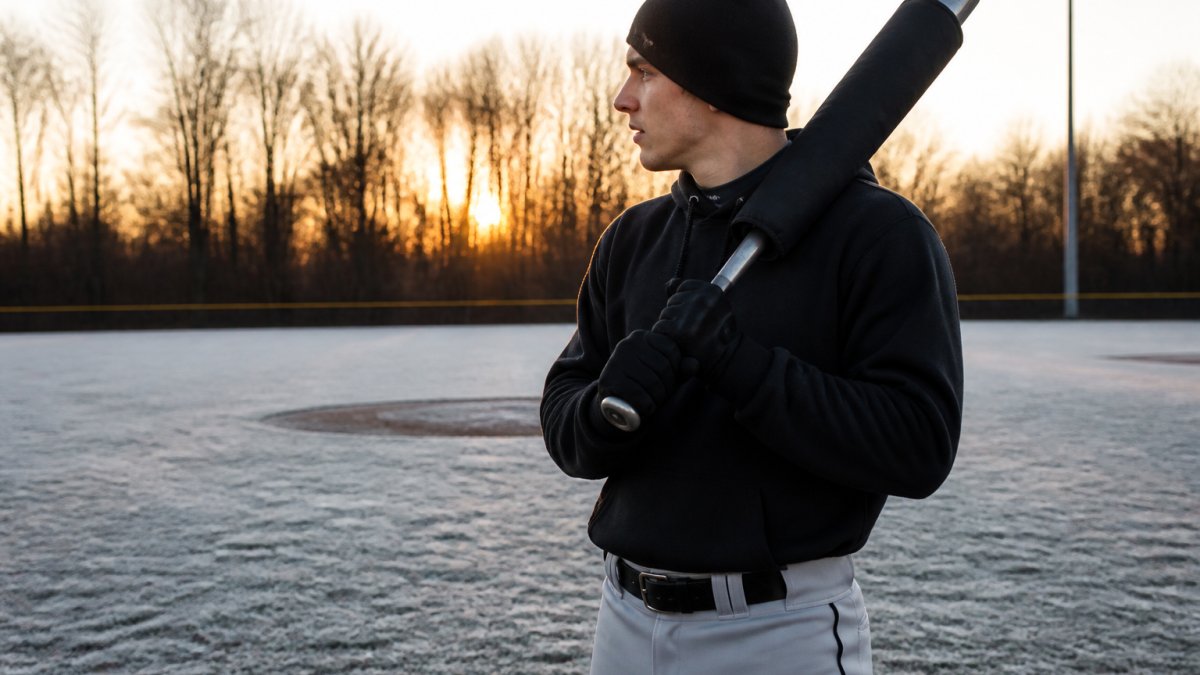
How heated bat sleeves preserve exit velocity
Heatstik is designed to gently warm the barrel of composite and alloy bats to help maintain responsiveness and consistency in cold weather.
Heatstik warmers have triple-layer construction, including a lightweight polyester inner layer, a built-in cloth heating pad with three adjustable temperature settings, and a 3mm neoprene outer layer. They use a USB-A connection and include a 30,000mAh power bank.
Choosing between hardball and softball models
The Apex Hardball Heated Bat Warmer fits bats up to 3 inches and costs $149.99 CAD. The HeatStik Softball Heated Bat Warmer fits bats up to 2 1/4 inches and costs $129.99 CAD.


Both listings specify a 30,000mAh power bank and USB-A connection. Check the listed fit limit for your bat: up to 3 inches for Apex Hardball and up to 2 1/4 inches for the softball warmer.
Baseball Hitting Tools: Tees, Nets, and Rebounder Equipment
Consistent hitting practice requires the right setup. Batting tees let you dial in mechanics without live pitching, batting nets contain your practice space, and rebounder nets add a reaction component that builds hand-eye coordination and footwork.
Batting Tees: Selection and Use
Not all tees are equal. The three main types are:
- Standard rubber tee: Durable and affordable ($40-$80 CAD), but the fixed height limits variability. Best for beginners grooving a consistent swing path.
- Adjustable telescoping tee: Height adjusts from roughly 20 to 45 inches, letting you work on high and low pitches. Expect to pay $60-$120 CAD. A common pattern is to set the tee at knee height for driving line drives, then raise it to work on getting on top of the ball.
- Brush or flexible tee: The top bristles or flexes on contact, reducing feedback interference and encouraging a flat swing plane. These run $80-$150 CAD and are popular for tee work that mimics game swings.
Place the tee so the ball sits at the front edge of the plate for inside pitches and toward the back for outside pitches. A simple progression: 10 swings middle-middle for balance, 10 inside for hip rotation, 10 outside for extension. Keep sessions to 10-15 minutes to groove your stroke without fatigue.
Batting Nets: Space, Durability, and Setup
Nets are rated by ball speed and intended use. A basic backyard net ($150-$300 CAD) handles up to 70-80 mph, fine for tee work and soft toss. For live pitching or machine work, look for a net rated to at least 100 mph, which means heavier gauge netting and a sturdier frame ($300-$600 CAD).
Key buying criteria:
- Footprint: A 7x7-foot net fits most garages and basements; a 10x10-foot net needs a driveway or yard.
- Frame material: Steel frames are heavier but more stable; aluminum is lighter and more portable.
- Assembly: Look for pop-up or snap-together designs if you need to move the net regularly. Permanent cage setups are better for dedicated spaces.
- Safety: Always place the net so the opening faces away from windows, streets, or neighbors. Use a weighted base or stakes for outdoor setups.
Rebounder Nets: Reaction and Fielding Drills
Rebounder nets (pitch-back nets) return the ball on an arc, forcing you to read the rebound and react. They're excellent for:
- Ground ball reaction: Stand 15-20 feet away and throw at ground level; the rebound simulates a grounder.
- Fly ball tracking: Throw higher on the net for a lofted return.
- Hand-eye coordination: Use a smaller or reaction ball for added challenge.
Prices run $100-$400 CAD depending on size and frame durability. Use a rebounder for 10-15 minutes as a warm-up before fielding practice, focusing on first-step quickness and glove positioning.
Putting It Together: A Sample Solo Session
A 30-minute solo hitting session might look like this:
- Warm-up (5 min): Dynamic stretches and 10 dry swings.
- Tee work (10 min): 30 swings, 10 middle, 10 inside, 10 outside, focusing on a specific cue (e.g., “stay through the ball”).
- Net work (10 min): 20 swings off a tee into the net, or soft toss with a partner.
- Rebounder (5 min): 15-20 reaction drills to finish.
This structure works mechanics, contact, and reaction without overdoing any one element.
Bat Speed Training Equipment: Weighted Bats and Resistance Training
Bat speed comes from rotational power. Weighted bats force your body to work harder during the swing, building explosive strength. A common approach: use a bat 5-10% heavier than your game bat for 10-15 swings, then return to your regular bat, the contrast makes your normal swing feel quicker.
Weighted Bats: Types and Progression
Weighted bats come in several forms:
- Donut weights: A ring that slides over your game bat ($20-$40 CAD). Convenient but limited to on-deck use; do not swing a donut-weighted bat at full speed as it can alter mechanics.
- Weighted training bats: Purpose-built bats ranging from 25 to 60 ounces ($80-$200 CAD). These are designed for controlled swings, not full-speed hitting.
- Variable-weight bats: Some models let you add or remove weights to progress gradually.
A safe progression:
- Week 1-2: 10 swings with a bat 5% heavier than your game bat, twice per week.
- Week 3-4: Increase to 15 swings, still twice per week.
- Week 5+: Add a second set of 10 swings with a bat 10% heavier, but only if mechanics remain sound.
Resistance Bands: Rotational Power and Arm Care
Resistance bands ($20-$100 CAD) build rotational power and shoulder strength. Two key exercises:
Apex Hardball Heated Bat Warmer →
- Rotational pulls: Anchor a band at chest height, stand sideways, and pull across your body mimicking a swing. 2-3 sets of 10-12 reps per side.
- Shoulder external rotations: Anchor the band at elbow height and rotate your forearm outward. 2-3 sets of 15 reps per arm, a staple of arm care programs.
Bands are ideal for off-season conditioning without impact stress, and they're portable enough for pre-practice warm-ups.
Measuring Progress
Bat speed gains are best tracked with a radar gun or a swing speed sensor. A common pattern is to measure bat speed before starting a weighted program, then re-test every 4-6 weeks. Expect gains of 2-5 mph over a season with consistent work. Without measurement, it is easy to mistake increased effort for increased speed.
Sample Weekly Bat Speed Routine
- Monday: Weighted bat swings (10 swings with 5% heavier bat) + rotational band pulls (3x10).
- Wednesday: Regular batting practice, focus on mechanics.
- Friday: Weighted bat swings (15 swings with 5% heavier bat) + shoulder external rotations (3x15).
- Weekend: Rest or light tee work.
This routine balances strength work with skill practice and recovery.
Exit Velocity Training: Radar Guns and Performance Measurement
You can't improve what you don't measure. Radar guns give real-time exit velocity feedback, helping you track progress and identify which adjustments work. Modern units are portable, affordable, and accurate to within 1-2 mph.
Exit velocity depends on bat speed, sweet spot contact, and bat weight. A radar gun shows which swings are efficient and which are wasted effort.
Radar guns range from $200-$800 CAD depending on features. Entry-level models measure exit velocity only. Advanced models also track ball spin rate, launch angle, and distance. For individual players, an entry-level model is sufficient.
Baseball Pitching Machines: Consistency and Pitch Variety
Pitching machines deliver consistent fastballs or breaking balls, letting hitters practice without a live pitcher, invaluable for team practice when you need repetition and don't have enough arms.
Machines range from single-speed models ($300-$600 CAD) to programmable units ($1,500-$3,000+ CAD). Single-speed machines throw fastballs at one velocity, useful for young players learning contact.
For travel teams or clubs, a mid-range machine ($800-$1,500 CAD) balances cost and versatility. For individual practice, many players use a local batting facility with machines rather than owning one.
Quick Comparison: Matching Tools to Your Training Goals
If you're training for early-season tournaments in cold weather: Heated bat warmer + batting tee + radar gun.
If you're building swing power: Weighted bats + resistance bands + batting net. Train rotational power, then practice with your game bat in a controlled environment.
If you're a travel team coach: Pitching machine + radar gun + rebounder nets.
If you're a solo player with limited budget: Batting tee + portable net + resistance bands. This combination covers mechanics, consistency, and strength for under $250 CAD.
Building Your Advanced Training Setup: Where to Start
Start with one tool that addresses your biggest weakness. Losing performance in cold weather? A heated bat warmer comes first.
Most players benefit from a layered approach, temperature management, mechanics work, strength training, and measurement, but you don't need everything at once.
For specific questions about heated bat warmers, compatibility with your bats, or setup advice, check our FAQ for answers to the most common questions.
Preparation is one part of getting ready to step into the box.
The Heatstik Heated Bat Warmer is designed to help maintain bat responsiveness during cold-weather play. Its included power bank can also charge mobile devices.
Frequently Asked Questions
What is the best advanced baseball training tool for improving exit velocity?
Exit velocity training can involve multiple tools: radar guns measure exit velocity, and batting tees allow practice without pitch timing. Heatstik warmers are designed to help maintain bat responsiveness in cold weather.
How do heated bat warmers compare to regular bat cozies or insulated covers?
Heatstik warmers use a built-in cloth heating pad powered through a USB-A connection and include a 30,000mAh power bank. The product is designed to gently warm the barrel of composite and alloy bats in cold weather.
Which advanced baseball training tools work best for youth athletes starting competitive play?
Batting tees, soft-toss trainers, radar guns, and weighted bats are among the tools players may consider for practice. Heatstik warmers are designed to help maintain bat responsiveness in cold weather.
How often should I use advanced baseball training tools to see measurable results?
Practice frequency and duration depend on the player and training plan. A radar gun can measure exit velocity. Heatstik warmers are designed to help maintain bat responsiveness in cold weather.
