
Best Softball Accessories: Selection Guide
Table of Contents
- Essential Softball Accessories Every Player Needs
- Softball Equipment for Beginners: Where to Start
- Softball Training Equipment to Boost Performance
- Protecting Your Bat in Cold Weather with Heated Gear
- Softball Equipment Maintenance: Care and Durability
- Comparison Table: Heated Bat Warmer Options
- Choosing the Right Accessories for Your Position
- Frequently Asked Questions
Last Updated: October 12, 2026
Essential Softball Accessories Every Player Needs
The difference between stepping into the batter's box confident and stepping in uncertain often comes down to preparation. The best softball accessories aren't about looking the part; they protect your body, extend equipment life, and keep your focus on the game, regardless of conditions.
At Heatstik, we know players invest heavily in quality bats, gloves, and protective gear. The challenge isn't finding equipment, it's finding accessories that work together to solve real problems. Cold weather kills bat performance, wet conditions damage leather and metal, and improper storage causes premature wear.
Essential accessories fall into four categories: protective gear, maintenance items, storage solutions, and performance tools. Together they form a system that lets you focus on your game instead of your gear.
Softball Equipment for Beginners: Where to Start
Starting softball means navigating a lot of choices quickly. New players often buy everything at once, then realize some purchases weren't necessary. Prioritize based on immediate needs, then add specialized accessories as your game develops.
For beginners, the foundation is a quality glove, a league-appropriate bat, a batting helmet, and basic protective gear. Beyond that, focus on accessories that protect your investment: a bat bag, a protective face cage for practice, and basic maintenance supplies.
The Small Accessories Beginners Actually Forget
The small accessories decide whether a first season feels comfortable or chaotic. A beginner's kit is incomplete without:
- Batting gloves, one pair, sized so the fingers reach the end of the glove without bunching. They reduce sting on mishits and improve grip in humid conditions.
- Grip tape or a bat grip, factory grips wear smooth within a season. A fresh grip restores control for a few dollars.
- Sliding mitt or sliding shorts, if your league allows head-first slides, a sliding mitt protects the hand and wrist. Confirm with your coach first, because some youth leagues restrict them.
- Sunglasses, polarized lenses cut glare on pop-ups and fly balls. A cheap sport pair beats squinting into the sun.
- Sweatband or headband, keeps sweat out of your eyes during long innings and doubles as a place to tuck hair under a helmet.
- Water bottle, a wide-mouth bottle that fits a dugout fence holder. Hydration is the most overlooked piece of game-day gear.
- Equipment organizer or bag insert, a simple mesh pouch keeps batting gloves, grip tape, and sunscreen from disappearing to the bottom of a bat bag.
Fit and League-Rule Checks Before You Buy
Run three checks before purchasing accessories:
- Helmet and face mask fit, the helmet should sit level, with the front pad about an inch above the eyebrows and no side-to-side wobble when you shake your head. A face mask should not touch the chin or nose.
- Bat certification, most leagues require bats stamped with a recognized certification mark. Check your league's rulebook or ask your coach before buying, because an uncertified bat cannot be used in games.
- Glove size by position, infield gloves typically run 11 to 12 inches, outfield gloves 12 to 13 inches, and catcher's mitts are measured differently. A beginner outfielder with an infield glove will struggle to secure fly balls.
A Beginner's First-Season Budget Order
Spend in this order: helmet and face protection, glove, cleats, bat, bag, then the small accessories above. A quality bag protects everything else and outlasts two or three cheap ones.
Softball Training Equipment to Boost Performance
Training equipment separates casual players from serious ones. Batting tees, training balls, agility ladders, and resistance bands each serve a purpose, but the best training accessory is one you'll actually use consistently.
A quality batting tee lets you work on swing mechanics without a pitcher.
The mistake many players make is buying training equipment and not using it.
What matters most is consistency.
Protecting Your Bat in Cold Weather with Heated Gear
Cold weather is the enemy of bat performance. The traditional approach, accepting the performance loss or keeping bats indoors between innings, doesn't work in a competitive setting.
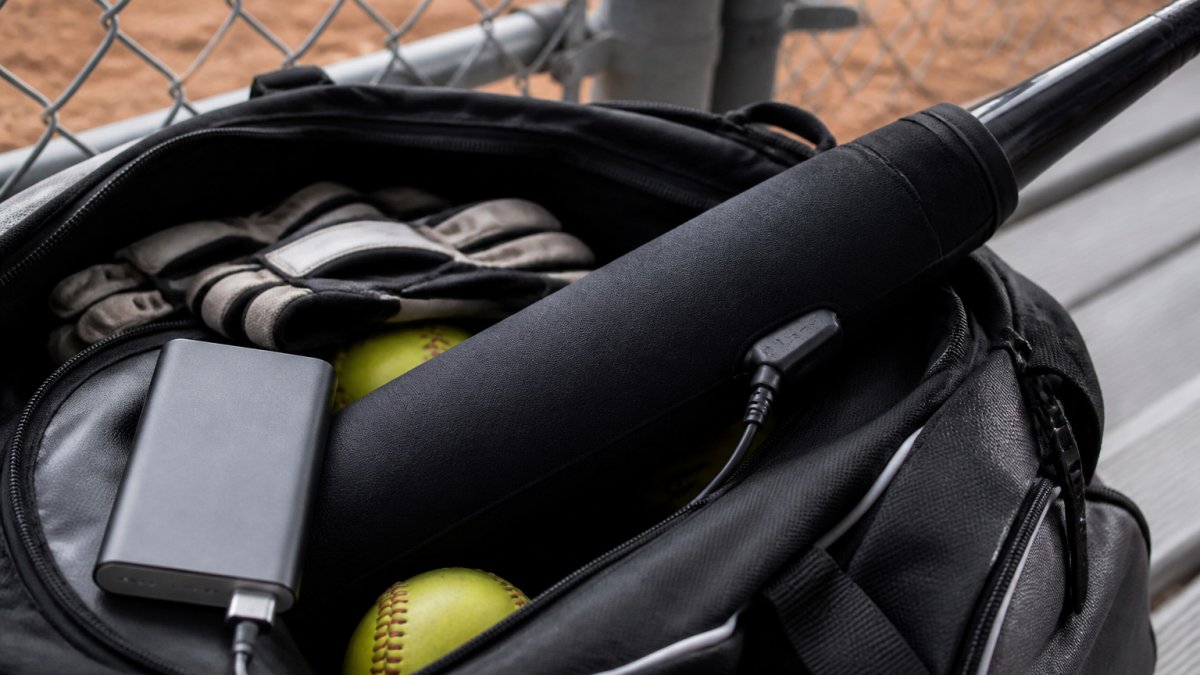
Heated bat warmers solve this problem directly. The HeatStik Softball Heated Bat Warmer maintains your bat at an optimal temperature using a USB-powered heating system.

This isn't a luxury for elite players.
Heatstik differs from basic bat cozies because it actively maintains temperature rather than providing passive insulation.
Softball Equipment Maintenance: Care and Durability
Equipment maintenance separates players who get three seasons from their gear and players who get one.
HeatStik Softball Heated Bat Warmer →
Glove maintenance starts with cleaning after each use: a soft, damp microfiber cloth removes dirt and sweat.
Bat care depends on whether you use composite or alloy, but both benefit from protection from extreme temperatures.
Protective gear, helmets, face cages, shin guards, needs regular inspection. Replace any cracked or dented helmet immediately; it's your most important safety investment.
The best maintenance habit is simple: clean and inspect your gear after every use.
Comparison Table: Heated Bat Warmer Options
When choosing a heated bat warmer, consider barrel diameter, power capacity, temperature control, and portability. Different bats require different sleeve sizes, and your usage pattern determines the right power option.
| Product | Power Included | Temperature Settings | Price | Best For |
|---|---|---|---|---|
| HeatStik Softball Heated Bat Warmer | 30,000mAh power bank included | 3 adjustable settings | $129.99 | Softball players, composite and alloy bats |
| HeatStik Heated Bat Warmer (Sleeve Only) | Power bank not included | 3 adjustable settings | $74.99 | Players with existing power banks or multiple bats |
| Apex Hardball Heated Bat Warmer | 30,000mAh power bank included | 3 adjustable settings | $149.99 | Baseball hardball players with larger barrel diameters |
| Apex Hardball Sleeve Only | Power bank not included | 3 adjustable settings | $74.99 | Hardball players with existing power solutions |
| Heatstik Diamond Power Pack | 30,000mAh capacity | N/A | $79.99 | Teams needing extra power capacity for multiple bats or devices |
If you're buying your first heated bat warmer without a compatible power bank, the complete HeatStik Softball Heated Bat Warmer at $129.99 is the logical choice. If you already have a power bank or want to equip multiple bats, the sleeve-only option at $74.99 saves money. The Diamond Power Pack at $79.99 serves teams needing extended power capacity.

Choosing the Right Accessories for Your Position
Different positions require different protective gear and accessories. A catcher needs different protection than an outfielder, and an infielder benefits from different training tools than a pitcher. Knowing your position helps you prioritize.
Catcher
Catchers carry the heaviest accessory load. Beyond the required chest protector, leg guards, throat protector, and helmet with face mask, the small accessories that matter most are:
- Catcher's mitt sized 32 to 34 inches for most adult players, with a closed web for framing pitches.
- Wrist coach or play card holder for calling pitches and defensive signals.
- Knee savers or gel knee pads for long innings behind the plate.
- Extra helmet padding and a mask with a throat guard, inspect the mask after every foul tip and replace any cracked cage immediately.
- Glove conditioner, catcher's mitts take the most abuse and need oiling more often than fielding gloves.
Infield
Infielders rely on quick hands and footwork, so the accessory list leans toward training and glove care:
- Infield glove in the 11 to 12 inch range with an open web for quick transfers.
- Agility ladder and reaction balls for first-step quickness.
- Batting gloves, infielders often go through two or three pairs a season because of dirt and sweat.
- Grip tape, a fresh grip helps with bunting and slap hitting.
- Sliding mitt if your league permits head-first slides.
Outfield
Outfielders cover the most ground and spend the most time in direct sun, so sun protection and glove care rise in priority:
- Outfield glove in the 12 to 13 inch range with a deeper pocket for fly balls.
- Polarized sunglasses, a sport pair with a snug fit under a cap.
- Sunscreen and a sweatband for day games.
- Glove oil and a storage bag, UV and heat dry out leather faster in the outfield.
- Long-toss and weighted training balls for throwing strength.
Pitcher
Pitchers need arm care and recovery accessories more than protective gear:
- Resistance bands for shoulder and rotator cuff warm-ups.
- Ice packs or a cold compression sleeve for post-game recovery.
- Foam roller for muscle maintenance.
- Pitching rubber or a portable pitching mat for off-day work.
- A fielding glove, pitchers still field their position, so a glove in the 11.5 to 12 inch range works for most.
Beginner vs. Competitive Player
Beginners should buy the minimum that keeps them safe and organized: helmet, face protection, glove, cleats, bag, batting gloves, and a water bottle. Competitive players add position-specific training tools, a second pair of batting gloves, a spare grip, and a maintenance kit. The jump from beginner to competitive is about buying the right two or three items for your position, not more items.
Sizing and League-Rule Checks by Position
- Catcher's mitt, measure from the top of the web to the heel. A mitt that is too small will not frame pitches; too large and the ball rattles out.
- Helmet and mask, the mask should not touch the chin. Replace any helmet that has taken a direct hit, even if it looks intact.
- Sliding mitts, confirm with your league before buying. Some youth leagues restrict them.
- Bat certification, position does not change the bat rules, but pitchers who also hit should confirm their bat carries the required stamp for their league.
Frequently Asked Questions
What softball accessories do I actually need as a beginner?
Start with the fundamentals: a quality glove, batting helmet, and protective gear including a face mask. Add cleats for better field traction and a bat bag to protect your equipment during transport. As you progress, consider training accessories like a batting tee or resistance bands. The specific gear depends on your position, but these core items keep you safe and prepared for practice and games.
How can I keep my softball equipment in good condition?
Regular softball equipment maintenance extends the life of your gear. Clean your glove and bat after each use, store equipment in a dry location, and inspect for damage before games. For composite bats, avoid temperature extremes and use a heated bat warmer in cold weather to prevent cracking and dead spots. Replace worn glove padding and check helmet padding for compression. Proper storage in a quality equipment bag protects everything from weather and accidental damage.
What softball cold-weather gear should I use for early-season play?
Cold weather significantly reduces bat performance and exit velocity. A heated bat warmer like the HeatStik Softball Heated Bat Warmer ($129.99) maintains optimal barrel temperature between swings, ensuring consistent contact and responsiveness. Pair this with layered clothing, thermal gloves, and a warm-up jacket. The warmer's triple-layer construction with water-resistant neoprene protects against rain and dew while the USB-powered heating system keeps your bat game-ready throughout cold tournaments and early-season games.
Does a heated bat warmer actually improve performance, or is it just marketing?
Cold weather reduces bat performance, exit velocity, and sweet spot responsiveness. A heated bat warmer addresses this real physics issue by maintaining the barrel at optimal temperature, which improves composite and alloy bat performance. The HeatStik system uses a 30,000mAh power bank with three adjustable temperature settings to provide hours of consistent heat. Players in cold climates benefit most, particularly those in early-season or fall ball tournaments where temperature control directly impacts hitting consistency.
What's the difference between a heated bat warmer and a regular bat cover?
A regular insulated bat cover provides passive temperature retention but cannot restore warmth to a cold bat. A heated bat warmer actively warms the barrel using USB power, maintaining responsiveness and preventing dead spots that develop in cold conditions. The HeatStik includes a triple-layer design with a built-in heating pad and water-resistant neoprene outer layer. While more expensive than passive covers, the active heating delivers measurable performance benefits during cold-weather play, making it worthwhile for serious players.