
Portable Bat Heater Reviews: Keep Your Game Sharp
Table of Contents
- Why Cold Weather Kills Bat Performance
- How Portable Bat Heaters Prevent Cracking and Restore Responsiveness
- Cold Weather Composite Bat Care: Thermal Protection Essentials
- USB Powered Bat Sleeve Benefits for Tournament Play
- Composite Bat Temperature Limits and Safe Heating Practices
- Heatstik Heated Bat Warmer Options: Softball vs. Hardball
- Portable Bat Heater Investment: Cost vs. Performance Gains
- Frequently Asked Questions
Last Updated: September 23, 2026
Why Cold Weather Kills Bat Performance
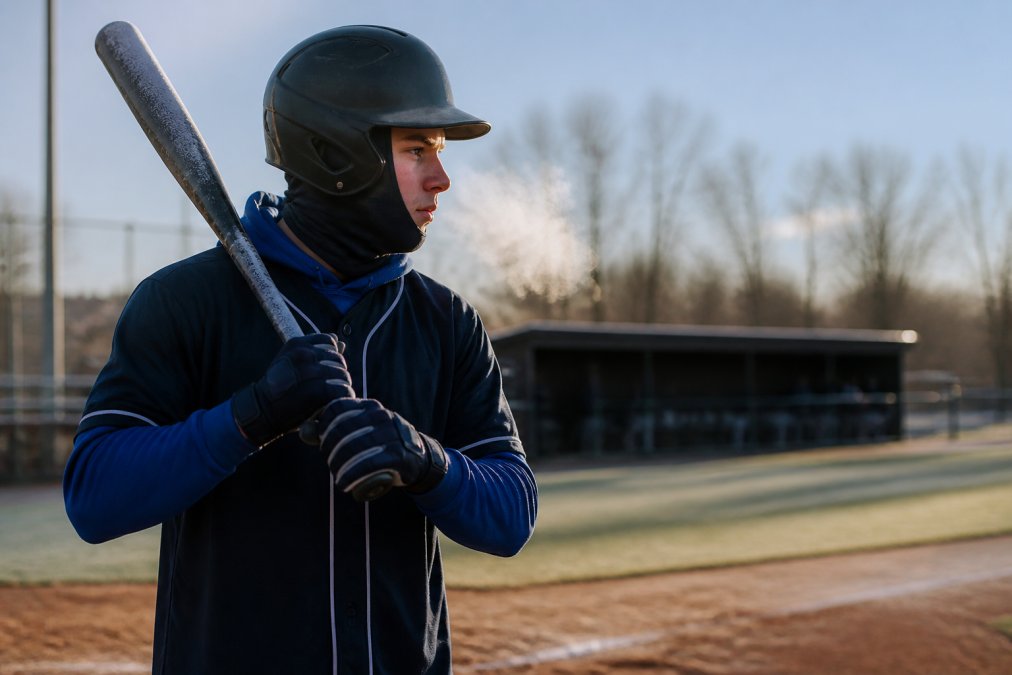
When temperatures drop, both the bat and the ball lose performance. Understanding this two-part problem is key to maintaining cold-weather play.
The Bat Side: Material Stiffness and Energy Transfer
Lower temperatures increase material stiffness in composite resins and aluminum alloys. A bat that performs perfectly at 20°C performs noticeably worse at 0°C. The barrel becomes harder and less forgiving, dead spots appear, and hitters feel reduced exit velocity and increased vibration immediately.
The Ball Side: Compression and Coefficient of Restitution
The baseball or softball itself degrades in cold weather. A baseball's cork-and-rubber core becomes less elastic, and the leather covering stiffens, reducing the ball's coefficient of restitution (COR), the measure of energy returned after impact. A cold ball won't compress as much on contact, won't rebound as efficiently, and will travel shorter distances despite acceptable exit velocity readings.
A 90 mph exit velocity hitting a warm ball might travel 115.8 meters; the same swing hitting a cold ball might only travel 106.7 meters.
The Combined Effect: Why Thermal Management Matters
The most effective cold-weather strategy addresses both: keep your bat warm with a portable bat heater, and keep your baseballs or softballs in an insulated bag close to your body. Thermal management of your equipment, both bat and ball, solves the complete problem.
How Portable Bat Heaters Prevent Cracking and Restore Responsiveness
A portable bat heater maintains optimal barrel temperature between swings, preserving material flexibility and responsiveness. USB-powered systems like Heatstik's deliver consistent heat without overheating the bat. When a bat stays warm, the resin matrix in composite bats remains flexible and aluminum maintains structural integrity, resulting in higher exit velocity, reduced vibration, and a more consistent sweet spot. Hitters report that warmed bats feel more responsive and forgiving.
Cold Weather Composite Bat Care: Thermal Protection Essentials
Composite bats are more temperature-sensitive than alloy bats. Most perform optimally between 15°C and 25°C. Below 10°C, performance degrades noticeably; below 0°C, structural damage risk increases significantly.
A portable heated bat sleeve maintains consistent temperature throughout practice and games, especially critical for tournament play. Store composite bats indoors at room temperature; never leave them in a cold car overnight.

USB Powered Bat Sleeve Benefits for Tournament Play
A USB-powered heated bat sleeve maintains optimal temperature regardless of ambient conditions and travels with you via a compact power bank. This ensures consistent temperature maintenance for every at-bat and allows you to warm your bat immediately before stepping up to the plate. The workflow is simple: slip your bat into the heated sleeve between innings and step into the box knowing your equipment is ready.

Composite Bat Temperature Limits and Safe Heating Practices
Understanding safe heating practices protects both your equipment and your warranty coverage. Composite bats have upper temperature limits just as they have lower ones, and exceeding those limits can damage the resin matrix permanently, or void your manufacturer's warranty entirely.
Temperature Specifications and Safe Operating Range
Most composite bats should never exceed 50°C during heating. The sweet spot for performance is maintaining barrel temperature between 15°C and 25°C. Heating systems designed specifically for bats, like purpose-built heated sleeves, use adjustable temperature settings to keep your bat in this optimal range without risk of overheating.
For alloy bats, the temperature tolerance is slightly broader. Most alloy bats tolerate temperatures up to 60°C without damage, but keeping them in the 15-25°C range is still optimal for performance. The key difference is that composite bats are more temperature-sensitive because the resin matrix that gives them their performance advantage is also more vulnerable to thermal stress.
Never attempt to heat a bat using direct heat sources like hair dryers, heat guns, or ovens. These methods are unpredictable and risk serious damage. A purpose-built heated sleeve provides controlled, consistent warmth that keeps your bat safe while maintaining performance. The difference between a heated sleeve (which maintains steady, low-level warmth) and a heat gun (which can spike to 200°C+) is the difference between protecting your investment and destroying it.
Warranty Implications and Manufacturer Guidance
HeatStik Softball Heated Bat Warmer →
Here's the critical question most players don't ask: Does heating a bat void the manufacturer's warranty?
The answer depends on the manufacturer and the heating method used. Most major bat manufacturers do not explicitly prohibit the use of external heating sleeves in their warranty documentation, provided the heating is gentle and controlled. However, they do prohibit direct heat sources and extreme temperatures.
The warranty risk comes in two forms:
1. Unauthorized Modification Risk: If you use an unapproved heating method (like a hair dryer or heat gun) and the bat subsequently cracks or develops a dead spot, the manufacturer may argue that the damage resulted from your modification, not a manufacturing defect. This gives them grounds to deny a warranty claim. A purpose-built heated sleeve designed for bats carries much lower risk because it's a passive accessory, not a modification to the bat itself.
2. Temperature Damage Documentation: If a bat fails and the manufacturer's inspection reveals heat damage (discoloration, resin degradation, or delamination), they may deny warranty coverage by claiming the damage was user-caused. This is why staying within the 15-25°C optimal range is critical, it keeps your heating practice within the bounds of normal use.
Before purchasing an expensive composite bat, check the manufacturer's warranty documentation. Most will include language like "warranty does not cover damage from extreme temperatures" or "unauthorized heating methods void coverage." A heated sleeve that maintains gentle, controlled warmth falls outside this language. A heat gun or oven clearly does not.
Best Practices for Warranty Protection
If you're investing in a premium composite bat ($300+), follow these guidelines to protect both performance and warranty:
- Use only purpose-built heated sleeves designed for bats, not improvised heating methods.
- Keep barrel temperature between 15°C and 25°C during heating, never exceed 50°C.
- Store your bat indoors at room temperature when not in use. Never leave it in a cold car overnight.
- If your bat develops a crack or dead spot after heating, document the incident and contact the manufacturer before attempting repairs.
- Keep records of your heating practices. If a warranty claim is disputed, being able to show that you used a controlled heating sleeve (not a heat gun) strengthens your case.
Check your specific bat manufacturer's specifications if available. Some premium composite bats come with explicit temperature recommendations or approved heating methods. Following these guidelines ensures you're getting the performance benefit without risking warranty issues or structural damage.
Heatstik Heated Bat Warmer Options: Softball vs. Hardball
Heatstik offers two dedicated heated bat warmer designs: the Softball Heated Bat Warmer and the Apex Hardball Heated Bat Warmer. Each is engineered specifically for its sport's bat dimensions.
The HeatStik Softball Heated Bat Warmer fits bats up to 2.25 inches in diameter, which covers the vast majority of softball bats. It includes a 30,000mAh fast-charging power bank, triple-layer construction with adjustable temperature settings, and water-resistant neoprene for field conditions. The price point is $129.99 for the complete system.
The Apex Hardball Heated Bat Warmer accommodates bats up to 3 inches in diameter, designed for standard baseball bats. It features the same triple-layer construction, 30,000mAh power bank, and three adjustable temperature settings. The price is $149.99 for the complete system.
Both systems use the same core technology: a built-in cloth heating pad powered by USB-A connection, with an inner layer of lightweight polyester and an outer layer of durable 3mm neoprene for water resistance and insulation.
| Feature | Softball Version | Hardball Version |
|---|---|---|
| Fits bat diameter up to | 2.25" | 3" |
| Included power bank | 30,000mAh | 30,000mAh |
| Temperature settings | 3 adjustable levels | 3 adjustable levels |
| Water-resistant neoprene | Yes (3mm) | Yes (3mm) |
| Price | $129.99 | $149.99 |
Portable Bat Heater Investment: Cost vs. Performance Gains
The investment in a portable bat heater makes financial sense when you factor in the cost of replacing damaged bats and the performance edge gained in cold-weather play.
Frequently Asked Questions
How much does a portable bat heater actually improve cold-weather performance?
Cold temperatures reduce composite bat responsiveness by restricting the resin matrix, which decreases exit velocity and sweet spot consistency. A portable bat heater maintains optimal barrel temperature between swings, helping restore the bat's intended performance characteristics. The Heatstik Heated Bat Warmer uses a 30,000mAh power bank to deliver hours of consistent warmth, allowing players to step into the batter's box with the same confidence they'd have in warm weather.
What makes a USB-powered bat sleeve better than a passive insulated cover?
Passive insulated sleeves only trap existing heat, they cannot generate warmth. A USB powered bat sleeve benefits include active temperature regulation that continuously maintains the barrel at an optimal hitting temperature. The Heatstik design features a triple-layer construction with a built-in heating pad and three adjustable temperature settings, ensuring your bat stays responsive throughout the game, not just between innings.
At what temperature should you stop using a composite bat without heating protection?
Composite bat temperature limits typically range from 10°C (50°F) downward, where performance degradation becomes noticeable and the risk of structural damage increases. Below 4°C (40°F), the resin can become brittle and micro-fractures may develop from impact stress. Cold weather composite bat care requires either active heating or removing the bat from cold exposure until it warms. This is why portable bat heaters are essential for early-season tournaments and late-fall ball in cold climates.
Is a portable bat heater worth buying if my team only plays a few cold games each season?
If you've invested in a quality composite or alloy bat, protecting that investment makes financial sense. A single cracked barrel can cost $200-$400 in replacement. The Heatstik Softball Heated Bat Warmer costs $129.99 and covers multiple bats and seasons. For competitive players, even 4-5 cold games per season justify the cost. Additionally, the included 30,000mAh power bank charges phones and other devices, adding value beyond bat heating.