
Heated Bat Sleeve vs Insulated Cover: Which Keeps Bats Warm?
Table of Contents
- Heated Bat Sleeve vs Insulated Cover: Quick Comparison
- How Heated Sleeves and Insulated Covers Protect Bats in Cold Weather
- Effects of Low Temperatures on Composite Bat Materials
- What Temperature Is Too Cold for a Bat
- Heated vs Passive: Temperature Control and Heat Retention
- How Long to Warm a Baseball Bat Before Play
- Baseball Bat Warmer: Cost, Portability, and Real-World Use
- Which Option Should You Choose?
- Frequently Asked Questions
Last Updated: October 18, 2026
Heated Bat Sleeve vs Insulated Cover: Quick Comparison
When temperatures drop, your bat's performance drops with it. Cold composite and alloy bats lose responsiveness, develop dead spots, and feel sluggish at contact. The question isn't whether to protect your investment, it's how.
A heated bat sleeve vs insulated cover represents two fundamentally different approaches to the same problem. One actively warms your bat using USB power and heating elements. The other relies on passive insulation to slow heat loss. Both work, but they solve the problem in opposite ways, and the choice depends on your playing schedule, budget, and how much control you want over bat temperature.
This guide breaks down the real differences, shows you what temperature actually matters, and helps you pick the right solution for your situation.
How Heated Sleeves and Insulated Covers Protect Bats in Cold Weather
Cold weather affects bats in two ways: the material stiffens, and the bat loses the energy transfer that generates exit velocity. Composite bats are especially vulnerable because the resin matrix that holds the fibers together becomes brittle in cold temperatures.
A heated sleeve solves this by maintaining barrel temperature between at-bats. The heating element runs through a cloth pad embedded in the sleeve's middle layer. You slip the sleeve onto your bat, connect the USB cable to a power bank, and the bat stays warm, ready to perform the same way it does indoors.

An insulated cover works differently. It wraps around the bat with multiple layers of thermal material (typically neoprene and foam). The cover doesn't add heat. Instead, it traps the bat's existing warmth and slows the rate at which cold air cools the barrel. Think of it like a thermos, it preserves temperature but doesn't generate it.
Both approaches reduce the performance hit from cold. The difference is consistency and control. A heated sleeve maintains a target temperature for hours. An insulated cover buys you time, but once the bat cools, it stays cool until you warm it another way (by swinging, holding it indoors, or using hand warmers).
Effects of Low Temperatures on Composite Bat Materials
Composite bats perform best within a specific temperature range. As temperatures drop, the resin that binds the carbon fiber and fiberglass becomes less flexible. The barrel stiffens, which sounds like it should be good, but it's not.
A stiffer barrel means less energy transfer from your swing into the ball. The sweet spot shrinks. Vibration increases, which translates to hand sting and a dead feel at contact. Cracking risk also rises. Cold composite fibers are more brittle, and sudden impact stress can cause micro-fractures that grow into visible cracks over time.
Alloy bats face a different problem. The aluminum walls become less responsive in cold, reducing the trampoline effect that generates exit velocity. The bat feels heavier and slower. You don't get the same pop, and you're more likely to hit off the end of the barrel instead of the sweet spot.
Both materials recover their performance when they warm up. The resin becomes flexible again. The trampoline effect returns. The sweet spot widens. This is why teams that invest in temperature control during early season see measurable improvements in contact consistency and exit velocity.
What Temperature Is Too Cold for a Bat
Most composite bats perform noticeably worse below 10°C. Between 0°C and 10°C, you'll feel the difference, reduced pop, dead spots, higher vibration. Below 0°C, the performance drop becomes severe. Your bat will feel like a completely different tool.
Alloy bats start losing responsiveness around 5°C. They're less forgiving than composite bats in cold, which is why many teams switch to composite for cold-weather play, but only if they manage temperature.
The real threshold depends on your bat. Premium composite bats with multi-directional fibers handle cold better than entry-level models. Hybrid bats (composite barrel, alloy handle) split the difference. The best way to know your bat's cold-weather performance is to test it, hit in cold conditions and pay attention to how the sweet spot feels and where you're making contact.
If you're playing in temperatures below 5°C regularly, temperature management moves from "nice to have" to essential if you want consistent performance.
Heated vs Passive: Temperature Control and Heat Retention
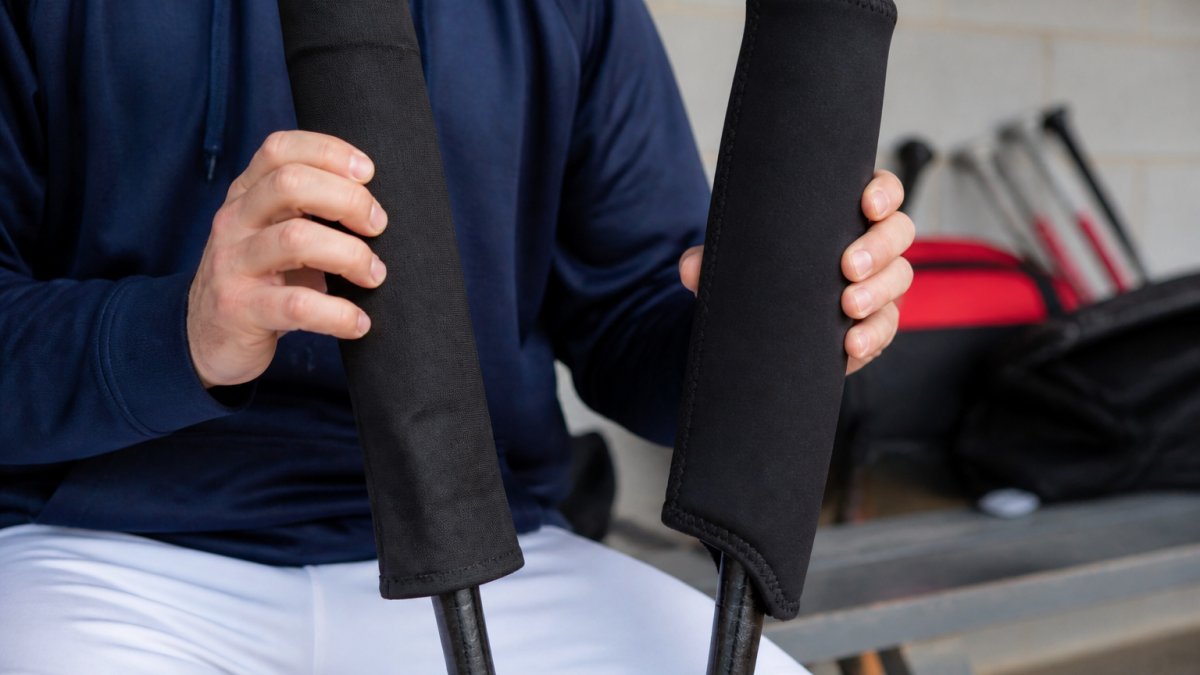
This is where the two approaches diverge completely.
A heated sleeve maintains your bat at a controlled temperature regardless of outside conditions. The heating element keeps the barrel warm between at-bats. You step up to the plate with a bat that performs the same way it does in indoor practice.
An insulated cover preserves whatever temperature your bat currently has. If your bat is warm when you put the cover on, it stays warm longer than it would without protection. If your bat is cold, the cover slows the cooling process but doesn't reverse it.
For teams playing multiple games in a day in cold weather, the difference becomes obvious. With a heated sleeve, your bat performs consistently through game 2 and game 3. With an insulated cover, your bat cools between games, and you're back to managing cold-weather performance issues in the later matchups.
The temperature retention difference is measurable. An insulated cover might preserve 10-15°C of warmth for 30-45 minutes, depending on outside temperature and cover thickness. Once your bat cools below the performance threshold, the cover slows further cooling but doesn't bring it back up.
HeatStik Softball Heated Bat Warmer →
How Long to Warm a Baseball Bat Before Play
If you're using a heated sleeve, you need about 15-20 minutes of active heating before your bat reaches optimal temperature. Most players put the sleeve on during warm-ups, connect the power bank, and by the time they're ready to hit, the barrel is warm and responsive.

If you're using an insulated cover alone, you need to warm your bat another way first. Swing it indoors for 5 minutes, hold it near a heater, or use hand warmers wrapped around the barrel before putting the cover on. Once the cover is on, the bat will hold that warmth for 30-45 minutes depending on outside temperature.
The practical difference: a heated sleeve requires planning (charge the power bank the night before, bring it to the field). An insulated cover requires less prep but demands that you warm your bat actively before the cover can do its job.
For early-season play, where you might have one or two cold games a week, either approach works. For fall ball or late-season tournaments where you're playing multiple games in a single day, a heated sleeve becomes the more reliable choice because it maintains temperature throughout the day without requiring you to re-warm your bat between matchups.
Baseball Bat Warmer: Cost, Portability, and Real-World Use
A heated bat sleeve costs between $74.99 and $149.99 depending on whether you buy the sleeve alone or the complete package with a power bank. The Heatstik Softball Heated Bat Warmer runs $129.99 with power bank included, or $74.99 for the sleeve alone if you already have a USB power bank.
Insulated covers typically cost between $20 and $50, making them significantly cheaper upfront. But that math changes if you already own a power bank or need to buy one separately.
Portability matters in practice. A heated sleeve with power bank adds weight to your equipment bag, but it's compact enough to fit alongside your glove and helmet. The USB cable runs discreetly between the layers, so there's nothing dangling or getting caught.
An insulated cover is lighter and takes up less space. It slips off and on quickly, so you can remove it right before you step up to the plate. No cables, no battery management, no charging logistics.
Real-world use reveals the practical tradeoff. Teams using insulated covers report that they work well for occasional cold games but require more active management if you're playing multiple games in a single day or practicing outdoors in sustained cold.
The portability advantage goes to insulated covers. The performance advantage goes to heated sleeves, especially over the course of a tournament or season.
Which Option Should You Choose?
Pick a heated sleeve if you're playing in sustained cold (below 5°C), playing multiple games in a single day, or competing at a level where consistent bat performance directly affects your results.
Pick an insulated cover if you're playing occasional cold games, you're budget-conscious, or you prefer minimal equipment setup. An insulated cover works well for early-season play where you might have a few cold games mixed in with warmer ones. It's also a solid backup option to keep in your bag even if you own a heated sleeve.
| Factor | Heated Sleeve | Insulated Cover |
|---|---|---|
| Temperature control | Active (maintains target temp) | Passive (slows cooling only) |
| Best for | Multiple games in cold, consistent performance | Occasional cold games, budget |
| Setup required | Charge power bank, connect USB | None, wrap and go |
| Cost | $74.99-$149.99 | $20-$50 |
| Portability | Compact, fits in equipment bag | Lighter, easier to remove |
| Performance in extreme cold (below 0°C) | Maintains responsiveness | Slows decline, doesn't prevent it |
| Time to warm bat | 15-20 minutes active heating | Requires pre-warming before cover applied |
The real decision comes down to your schedule and performance standards. If you're serious about maintaining bat performance through a cold-weather season, a heated sleeve removes the guesswork. If you're playing a few cold games and want a simple, affordable protection layer, an insulated cover does the job.
For recreational play and budget-conscious parents, an insulated cover covers most use cases without the added complexity.
Cold bats cost you consistency, exit velocity, and confidence at the plate. At Heatstik, we built the heated bat sleeve to solve this problem directly, keeping your composite or alloy bat at optimal temperature so every swing performs the way you practiced it.
Frequently Asked Questions
Does a heated bat sleeve keep a bat warmer than an insulated cover?
Yes. A heated bat sleeve actively generates warmth through its built-in heating element and power source, maintaining consistent barrel temperature between swings. An insulated cover only traps existing heat, it cannot raise bat temperature above ambient conditions. For sustained cold-weather performance, a heated sleeve delivers measurable temperature advantage, especially during extended games or tournaments where passive insulation alone loses effectiveness over time.
What temperature is too cold for a composite bat?
Composite bats lose responsiveness below 10°C. At temperatures near or below freezing (0°C), composite materials become stiff and brittle, reducing sweet spot size and exit velocity significantly. Alloy bats perform better in cold but still show performance drops below 5°C. Using a heated bat warmer or insulated cover helps maintain playable performance when outdoor temperatures fall into this range, protecting both bat integrity and hitting consistency.
How long should you warm a baseball bat before hitting?
For best results, warm your bat while you're in the on-deck circle or during warm-up drills, then keep it in the sleeve between at-bats.
Can an insulated bat cover protect a bat in cold weather?
An insulated cover slows heat loss and provides some protection against temperature shock, but it cannot prevent performance decline in very cold conditions. It works best as a short-term solution, keeping a bat warm during brief trips between the car and field, or during indoor-to-outdoor transitions. For extended outdoor play below 10°C, passive insulation alone is insufficient; a heated sleeve delivers superior performance maintenance.
Is a heated bat sleeve worth the cost for occasional cold-weather games?
If you play only 3-5 cold games per season, an insulated cover may meet your needs. However, if you play early-season tournaments, fall ball, or travel baseball in cold climates, a heated sleeve ($129.99-$149.99 CAD) pays dividends through consistent performance and bat protection. Consider total investment: protecting your bat during cold play justifies the accessory cost.