
Best Composite Bat Protection Accessories
Table of Contents
- Why Composite Bat Protection Matters in Cold Weather
- Composite Bat Sleeve Options: Heated vs. Standard
- Baseball Bat Grip Tape and Grip Enhancers
- Composite Bat Cold Weather Protection: Beyond Sleeves
- Baseball Bat Storage and Off-Season Care
- Quick Comparison: Protection Accessory Features and Pricing
- How to Choose the Right Protection Setup for Your Needs
- Frequently Asked Questions
Last Updated: October 17, 2026
Why Composite Bat Protection Matters in Cold Weather
Cold weather stiffens a composite bat's resin matrix, reducing exit velocity and creating dead spots. Players lose pop, the sweet spot shrinks, and solid contact feels less rewarding, a real gap in early-season games and cold-night tournaments.
For serious players with high-end composite bats, cold-weather protection is essential to maintaining a competitive edge.
Composite Bat Sleeve Options: Heated vs. Standard
The market offers two approaches: heated systems that actively maintain barrel temperature, and insulated-only sleeves that slow heat loss. The performance difference is substantial.
Heated bat sleeves use USB-powered heating pads to keep your composite bat at optimal temperature throughout the game. Insulated sleeves are passive barriers; they delay cooling but don't prevent it.
HeatStik Heated Bat Warmer: Active Temperature Control
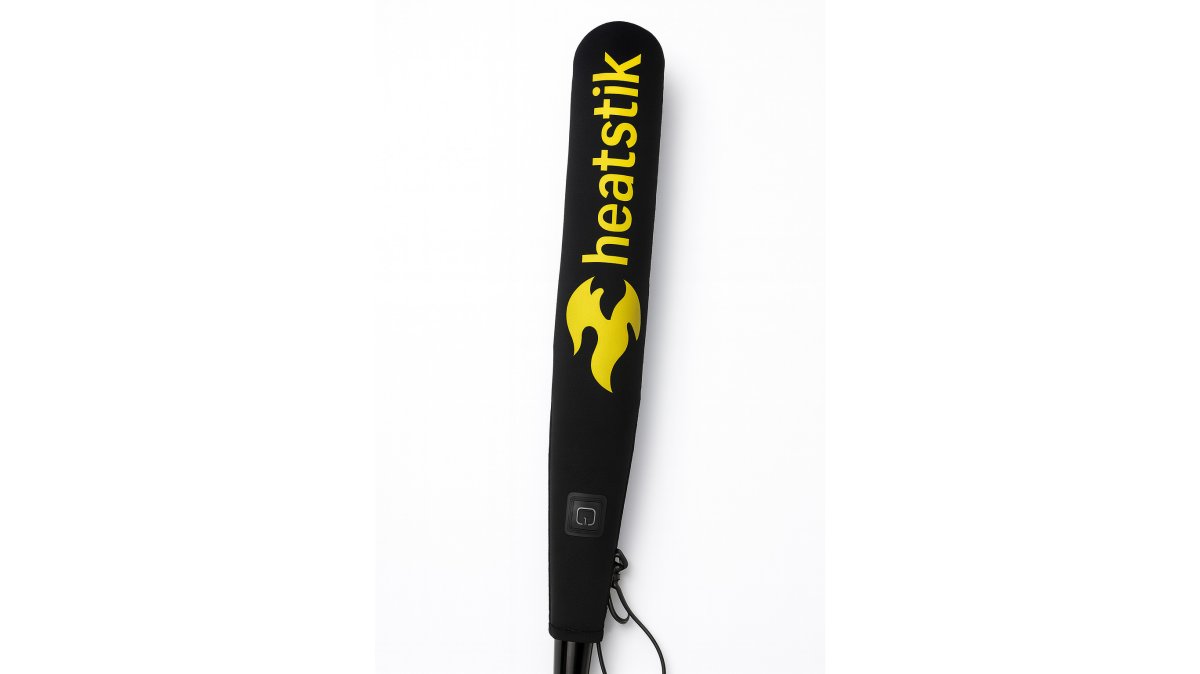
The HeatStik Heated Bat Warmer ($129.99 CAD) represents the active heating approach for softball and fastpitch bats. It features triple-layer construction: a lightweight polyester inner layer for smooth fit, a built-in cloth heating pad with 3 adjustable temperature settings, and a durable 3mm neoprene outer layer that resists water and locks in heat.

The USB-A connection runs discreetly between the layers, and the included 30,000mAh power bank provides hours of consistent heat. Slip it on before games or between innings; the water-resistant neoprene handles damp conditions without damage.
The real advantage is reliability: once your bat reaches optimal temperature, the heated pad holds it there. You're controlling the environment your bat experiences rather than chasing heat loss.
HeatStik Fastpitch Heated Bat Warmer: Softball-Specific Design
The HeatStik Fastpitch Heated Bat Warmer ($129.99 CAD) is purpose-built for fastpitch softball bats up to 2 1/4" barrel diameter. It matches the standard version's triple-layer construction, 3 temperature settings, and 30,000mAh power bank, but fits the narrower barrels common in fastpitch equipment.
For fastpitch players, the precise fit maintains consistent barrel contact for even heat distribution.
Apex Hardball Heated Bat Warmer: Hardball Barrel Compatibility
The Apex Hardball Heated Bat Warmer ($149.99 CAD) handles the larger barrel diameters found in hardball bats, up to 3 inches. The construction mirrors the softball versions: triple-layer design, 3 adjustable temperature settings, and the same 30,000mAh power bank.

Forcing hardball equipment into a softball-sized sleeve won't work; the contact points are wrong and heat distribution becomes uneven.
Sleeve-Only Options for Budget-Conscious Players
If you already own a compatible power bank or prefer a modular approach, Heatstik offers sleeve-only versions at $74.99 CAD for fastpitch and hardball.
This makes sense if you're managing multiple bats or want to reduce upfront cost.
Baseball Bat Grip Tape and Grip Enhancers
Grip is the one protection accessory that touches both the handle and your hands, and it's where most buyers overspend or buy the wrong thing.
What Grip Tape Actually Does on a Composite Handle
Composite bats ship with a thin factory grip over either a straight composite shaft (one-piece) or a two-piece design with a separate handle section. Grip tape adds tack so your top hand doesn't rotate through the swing, cushions vibration, and protects the handle from sweat and pine tar residue.
Tape thickness changes feel more than most players expect. Thin tape (around 0.5 mm) keeps the handle close to stock with a firmer, more direct feel many contact hitters prefer.
Tape Types and What They Are Good For
- Precut grip tape: die-cut to a standard handle length, faster to install, and consistent from bat to bat. Best if you re-grip often or manage team equipment.
- Wrap-style tape: you control overlap and thickness, so you can build up a thin handle or taper the grip toward the knob. More skill required, more customization.
- Cushioned or perforated tape: better moisture management in humid or rainy conditions; slightly softer feel.
For cold-weather play, a perforated or textured tape tends to hold grip better when hands are numb or damp. A smooth leather grip that feels great in July can feel like glass in October.
Grip Enhancers: Pine Tar and Its Alternatives
Pine tar and spray-on tackifiers add traction beyond tape, but with real trade-offs. Pine tar is sticky, collects dirt, transfers onto gloves and bags, and needs reapplication. Many leagues restrict or ban it as a foreign substance.
A practical middle path is a rosin bag or light tack spray for in-game touch-ups. If you use pine tar, keep it on the handle only and wipe the barrel after play so residue does not bake onto the composite surface.
HeatStik Softball Heated Bat Warmer →
Matching Grip to Your Protection Setup
Grip is part of your protection strategy. If you use a heated sleeve, don't undermine it with a slick, sweat-soaked grip. A reasonable order of operations:
- Replace worn factory grip with a tape that matches your preferred thickness and texture.
- Add a league-legal tack enhancer only if your hands still slip in cold or wet conditions.
- Re-grip at the start of each cold season rather than waiting for visible wear; tack degrades before the tape looks bad.
Grip tape and enhancers won't protect a composite barrel from cold, but they protect the part of the bat you actually control, a small, cheap, high-use part of the setup.
Composite Bat Cold Weather Protection: Beyond Sleeves
A sleeve is the most visible protection accessory, but it's only one layer.
Why Composite Bats Are More Temperature-Sensitive Than Alloy
Composite barrels are built from layers of fiber and resin. Cold stiffens the resin, changing how the barrel flexes and shrinking the sweet spot. The bigger risk is thermal shock: moving a bat rapidly between a warm car and cold air, or between a heated sleeve and a cold dugout, stresses the bond between layers. Alloy bats lack a resin matrix to fatigue the same way, which is why cold-weather guidance for composite equipment is more cautious.
One-Piece vs. Two-Piece: Compatibility Matters
- One-piece composite bats have a continuous shaft-to-barrel construction. A sleeve needs to cover the barrel without putting pressure on the transition zone; a tight or poorly sized sleeve can rub at the joint.
- Two-piece composite bats have a separate handle and barrel joined at a connection point. Sleeves and weighted warmers should sit on the barrel only, not bridge the connection, because clamping or compressing the joint is exactly where you do not want added stress.
- Barrel diameter is the other fit variable. Fastpitch barrels commonly run up to about 2 1/4 inches, while hardball barrels can run larger. A sleeve sized for the wrong diameter will not make consistent contact, which defeats even heat distribution.
Before buying any sleeve, confirm the barrel diameter and whether your bat is one-piece or two-piece. If a product page doesn't state compatibility, ask before you buy.
What Accessories Can and Cannot Prevent
The honest trade-offs:
- Heated sleeves can slow or reverse barrel cooling and reduce thermal shock during play. They cannot repair existing cracks, restore a dead barrel, or protect against a bat that was already damaged before you bought the sleeve.
- Insulated sleeves slow heat loss but do not add heat. In genuinely cold conditions they buy time, not performance.
- Grip tape and enhancers protect handle feel and control. They do nothing for the barrel.
None of these accessories protect against manufacturing defects, a cracked barrel from a cold-weather mis-hit, or damage outside a warranty. Many composite bat warranties exclude use below a stated temperature.
Performance Trade-Offs to Weigh
- A heated sleeve adds a small amount of weight and bulk at the barrel end, which can shift swing weight slightly.
- A thick grip changes handle diameter and feel, which affects where your hands sit and how the bat releases.
A Practical Cold-Weather Routine
- Store bats indoors at room temperature, not in a garage, shed, or car overnight.
- Transport in an insulated bag or case to slow temperature change in transit.
- Warm the barrel gradually before play; a heated sleeve is the controlled way to do this. Do not blast a cold bat with direct high heat.
- Keep the bat in the sleeve between innings rather than exposing it to cold air.
- Inspect the barrel after each cold-weather session for cracks, chips, or a change in sound on contact.
- Follow the manufacturer's stated cold-weather limits.
Baseball Bat Storage and Off-Season Care
Temperature stability is the priority: store bats horizontally on a rack in a climate-controlled space. A basement or closet with steady temperature and low humidity is ideal. Avoid attics, garages, and sheds with extreme temperature swings.
Moisture is the second concern.
Clean your bats before storing them for the season. Use a soft cloth and mild soap, then dry thoroughly.
Quick Comparison: Protection Accessory Features and Pricing
| Accessory | Type | Price | Best For | Key Feature |
|---|---|---|---|---|
| HeatStik Heated Bat Warmer | Active heating | $129.99 CAD | Softball/fastpitch bats | USB-powered, 3 temperature settings |
| Apex Hardball Heated Bat Warmer | Active heating | $149.99 CAD | Hardball bats | Fits barrels up to 3" |
| HeatStik Sleeve Only | Active heating | $74.99 CAD | Budget option | Requires external power bank |
| Insulated bat sleeve | Passive insulation | Light cold weather | ||
| Grip tape | Handle protection | |||
| Grip enhancers | Handle traction |
How to Choose the Right Protection Setup for Your Needs
Cold climate + frequent play = Active heating. If temperatures regularly drop below 10°C and you play multiple games or tournaments, a heated bat sleeve is the right choice; the performance improvement justifies the cost. Choose the HeatStik Heated Bat Warmer for softball or the Apex for hardball.
All setups = proper storage. Off-season storage matters as much as game-day protection. A composite bat stored improperly will underperform next season, even with perfect in-season protection.
Cold weather doesn't have to limit your performance. The HeatStik Heated Bat Warmer is engineered for serious players: triple-layer construction, adjustable heating, and portable design keep your bat game-ready from the car to the batter's box.
Frequently Asked Questions
How do you protect a composite bat from cold weather?
Cold temperatures reduce composite bat performance by making the material stiffer and less responsive. Active heating with a composite bat sleeve like HeatStik maintains barrel warmth between swings, preserving the sweet spot. Passive protection includes storing bats indoors before games, wrapping them in insulated covers during transport, and avoiding rapid temperature changes. A combination of heating and proper storage delivers the best results for early-season and late-fall play.
Do bat sleeves protect composite bats?
Yes, bat sleeves provide multi-layered protection. Heated sleeves actively maintain performance by warming the barrel, while standard insulated sleeves slow heat loss. Both types protect against impact damage and moisture. HeatStik's triple-layer construction (polyester inner, heating pad middle, neoprene outer) shields composite bats from dew, dirt, and temperature swings. For maximum protection, pair a sleeve with proper storage practices and grip tape for handle control.
Does grip tape help protect a composite bat?
Grip tape protects the handle by reducing slippage and improving bat control. While grip tape doesn't insulate the barrel from cold, it protects the handle from moisture and repeated hand contact. Use grip tape alongside a composite bat sleeve for complete protection.
How should you store a composite bat between games?
Store composite bats indoors at room temperature, away from direct sunlight and extreme heat or cold. Keep bats horizontal on a rack or vertically in a bat bag with padding. Avoid leaving bats in vehicles, garages, or outdoor storage where temperatures fluctuate. Before storing, wipe the barrel dry to prevent moisture damage.
What is the best way to break in a composite bat?
Use practice sessions or lower-pressure games rather than full-power swings initially. Rotate the bat 90 degrees between hits to distribute impact evenly across the barrel. Once broken in, maintain performance with proper storage and protection accessories like heated sleeves during cold-weather play.