
Best Baseball Gear for Early Spring: Cold-Weather Essentials
Table of Contents
- Why Cold Weather Matters for Early Spring Baseball
- Is Playing Baseball in Freezing Weather Worth It?
- How to Warm Up a Baseball Bat for Cold-Weather Performance
- Best Base Layers for Baseball in Cold Climates
- Essential Protective Gear and Batting Gloves
- Training Aids and Game-Day Preparation Checklist
- Equipment Bag Organization for Cold-Weather Play
- Post-Game Recovery Gear and Maintenance for Wet Conditions
- Frequently Asked Questions
Last Updated: October 7, 2026
Why Cold Weather Matters for Early Spring Baseball
When selecting the best baseball gear for early spring, understanding how cold weather changes bat performance is essential. When temperatures drop, composite and alloy bats lose responsiveness at the sweet spot: the barrel becomes less forgiving, contact feels dead, and exit velocity drops. For competitive players, this gap can cost games in early-season tournaments.
Cold air is denser, and composite materials stiffen in low temperatures, reducing the trampoline effect that generates bat speed and exit velocity. Early spring hitters face a choice: accept the loss or manage it.
Maintaining optimal bat temperature improves contact consistency and confidence.
Is Playing Baseball in Freezing Weather Worth It?
Playing baseball in freezing weather is worth it if you're serious about competitive play. Early-season tournaments often determine playoff seeding and team momentum, and skipping them means missing critical development time.
The real question is how to play smart. Freezing conditions demand proper layering, cold-rated protective equipment, and equipment management that preserves bat performance. Teams that master this gain an edge over opponents who treat early spring as a warm-up.
Cold-weather play builds mental toughness and equipment discipline, and the resilience carries through the entire season.
How to Warm Up a Baseball Bat for Cold-Weather Performance
Warming a baseball bat before use is the most effective way to restore cold-weather performance. A cold bat needs active warming to reach optimal hitting temperature; passive insulation alone isn't enough in freezing conditions.
Understanding Cold-Weather Bat Performance Physics
Cold composite and alloy materials lose elasticity. As barrel temperature drops, the material becomes rigid and transfers less energy from swing to ball, like a cold tennis ball that bounces less than a warm one.
The sweet spot shrinks in cold weather, turning solid contact into glancing blows with reduced exit velocity. For young players still developing consistency, the effect is magnified.
Warming the bat restores its natural elasticity. A warmed bat performs measurably better than one sitting in cold air, with players reporting better feel, more consistent contact, and improved confidence.
HeatStik Heated Bat Warmer Solutions
The Apex Hardball Heated Bat Warmer ($149.99) is purpose-built for hardball players who need consistent performance in cold conditions. It fits bats up to 3 inches in diameter, covering most hardball bats. The triple-layer construction, lightweight polyester inner layer, built-in cloth heating pad with 3 adjustable temperature settings, and durable 3mm neoprene outer layer, maintains heat efficiently while protecting your bat from moisture.

The included 30,000mAh fast-charging power bank provides hours of consistent heat between swings, keeping your bat at optimal temperature throughout games and tournaments. The USB-A connection runs discreetly between the layers.

For softball players, the HeatStik Softball Heated Bat Warmer ($129.99) fits bats up to 2.25 inches with the same triple-layer design, power bank, and 3 adjustable temperature settings. Its water-resistant neoprene protects against rain, dew, and dirt.

Both models keep your bat warm without adding bulk, staying on between innings for consistent performance.
Best Base Layers for Baseball in Cold Climates
Base layers are your foundation for cold-weather performance. Moisture-wicking synthetics like polyester and merino wool pull sweat away from your skin, while cotton absorbs moisture and holds it against you, exactly what you don't want.
A proper layering system is a moisture-wicking base layer closest to skin, an insulating mid-layer, and a protective outer layer against wind and rain. Skipping any layer compromises the system.
Compression gear improves blood circulation, reduces muscle fatigue, and helps maintain core body temperature. Look for shirts and tights rated for cold-weather sports.
Among the best baseball gear for early spring, base layers that combine moisture-wicking with stretch for swing freedom are essential. Merino wool performs exceptionally well, regulating temperature naturally and resisting odor across multi-game weekends.
Essential Protective Gear and Batting Gloves
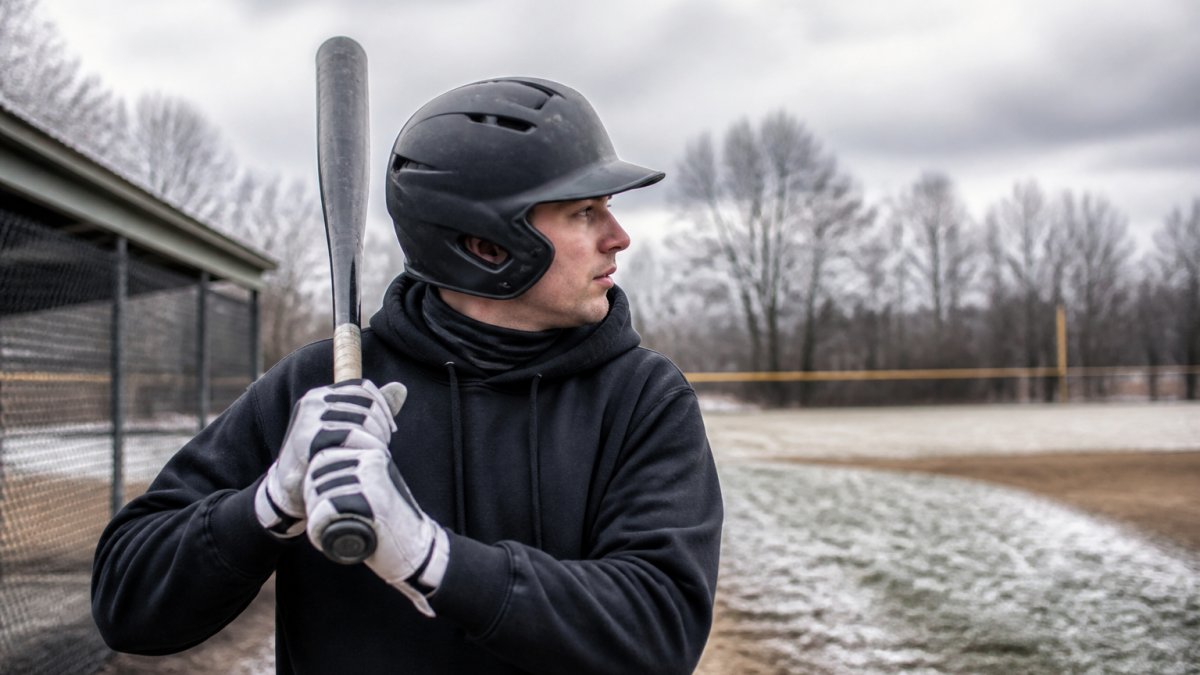
Cold-weather batting gloves are non-negotiable. Standard gloves lose grip in the cold, numbing your hands and hurting bat control. Look for textured, moisture-resistant gloves with reinforced palms and fingers designed for low-temperature play.
A protective helmet is essential year-round, but cold-weather models need adequate ventilation to prevent sweat buildup and rapid cooling, plus optional removable ear protection. Ensure it fits properly over a hood or beanie, since a loose fit compromises protection.
Protective cups and padding matter more in cold weather, since cold muscles are less flexible and recover more slowly from impacts. Proper padding reduces injury risk and speeds return to play.
Hand protection extends beyond batting gloves. Base runners and fielders benefit from lightweight liners under their fielding gloves for insulation and better grip on cold leather and metal.
HeatStik Softball Heated Bat Warmer →
Neck gaiters and face shields are optional but valuable in windy early spring games, protecting exposed skin and helping maintain core body temperature during extended time in the field.
Training Aids and Game-Day Preparation Checklist
Cold-weather training aids help you prepare effectively. Resistance bands rated for cold weather maintain elasticity when standard bands stiffen, and outdoor medicine balls handle temperature swings without cracking.
Core conditioning matters more in cold weather: a strong core maintains body temperature and improves swing mechanics when muscles work harder against the cold. Include planks, rotational exercises, and stability work in pre-season training.
A game-day preparation checklist ensures you don't miss critical steps:
- Arrive 45 minutes early to allow time for proper warm-up
- Warm your bat using the heated warmer for 10-15 minutes before first pitch
- Complete dynamic stretching focusing on hip and shoulder mobility
- Run through swing mechanics with emphasis on balance and follow-through
- Verify all protective equipment fits properly over cold-weather layers
- Confirm batting gloves provide adequate grip on a cold bat
- Check that your equipment bag contains extra layers for substitutes
- Hydrate consistently, cold weather makes dehydration less obvious but equally dangerous
- Monitor teammate condition for signs of cold-related issues
- Keep the bat warmer charged and accessible throughout the game
Post-warm-up, keep your bat in the warmer between at-bats. Even 5-10 minutes of cooling reduces performance noticeably. Rotation between players ensures everyone gets adequate warm-up time with the heated warmer.
Equipment Bag Organization for Cold-Weather Play
Cold-weather equipment takes up space, so organize your bag to access items quickly and protect gear from moisture. Put heavier items like cleats, shin guards, and padding at the bottom, where they won't shift or crush lighter gear.
Mid-level storage holds base layers and extra clothing, organized by layer type so you can grab the right piece quickly during equipment changes.
Top of the bag is reserved for frequently accessed items: batting gloves, the heated bat warmer, your bat, and your helmet. Keep the bat warmer easily accessible, you'll need it immediately upon arrival at the field. Store extra batting gloves in a separate waterproof pouch to keep them dry.
A dedicated compartment for the power bank keeps it separate from other equipment. The 30,000mAh Diamond Power Pack can charge your phone between games, so keep it accessible. A waterproof case protects the power bank from moisture during rainy tournaments.
Pack extra socks and a towel in a waterproof bag. Early spring tournaments often involve wet field conditions, and wet socks compromise foot warmth and blister prevention. A quick sock change between games makes a measurable difference in comfort and performance.
Post-Game Recovery Gear and Maintenance for Wet Conditions
Recovery gear becomes critical after playing in cold weather. Your muscles worked harder against the cold, and recovery time is longer. Bring warm, dry clothing for immediate post-game change.
A recovery hoodie designed for athletes serves multiple purposes: it keeps you warm immediately post-game, it's easy to pull on over damp gear, and it signals to your body that the workout is complete. The Heatstik Hoodie ($89.99) combines 50% cotton and 50% polyester (with exception variants at 40% cotton and 60% polyester) for comfort during recovery periods.
Maintenance for wet-weather play starts immediately after the game. Wipe down your bat with a dry cloth; moisture trapped on the barrel accelerates corrosion and can affect performance.
Batting gloves need air drying, not machine washing. Lay them flat in a warm room to dry completely before storing.
The heated bat warmer's neoprene exterior sheds water effectively, but the interior components need protection. After wet-weather play, disconnect the power bank and allow the warmer to air dry.
Check your protective equipment for damage after cold-weather play. Helmets, shin guards, and chest protectors can develop cracks in extreme cold. Early detection prevents equipment failure during critical moments in the game.
Cold-weather baseball demands preparation, proper equipment, and a mindset that treats early spring as meaningful competition rather than a warm-up period.
| Gear Type | Primary Function | Cold-Weather Importance | Maintenance |
|---|---|---|---|
| Heated bat warmer | Restores bat performance | Critical, prevents dead hits | Disconnect power bank, air dry after wet play |
| Moisture-wicking base layers | Prevents cooling from sweat | Essential, foundation of warmth | Wash in cold water, air dry |
| Cold-weather batting gloves | Maintains grip in cold | Critical, affects swing consistency | Air dry flat, rotate pairs |
| Protective equipment | Injury prevention | High, cold muscles recover slower | Inspect for cracks, replace if damaged |
| Recovery hoodie | Post-game warmth | Important, speeds recovery | Wash per label, store dry |
VIEW OUR HEATSTIK ASSORTMENT to explore heated bat warmers designed for your sport and playing level. Keep your bat game-ready, no matter the temperature.
Frequently Asked Questions
How do you keep baseball bats warm in cold weather?
The most effective method is using a heated bat warmer like the HeatStik Heated Bat Warmer ($129.99 for softball, $149.99 for hardball), which maintains optimal barrel temperature between swings. The device features a triple-layer construction with adjustable heating settings and runs on a 30,000mAh power bank. For bats stored between games, wrap them in insulated covers and keep them in your equipment bag or vehicle. Avoid leaving composite bats exposed to freezing temperatures, as cold reduces sweet spot responsiveness and exit velocity. Rotate your bats into the warmer 15-20 minutes before stepping up to the plate.
Does cold weather affect composite baseball bat performance?
Yes, significantly. Cold temperatures reduce the flexibility of composite bat materials, which decreases the trampoline effect that generates bat speed and distance. The sweet spot becomes less forgiving. Alloy bats are similarly affected. This is why warming your bat is critical for competitive play. The HeatStik Heated Bat Warmer solves this by keeping the barrel at peak performance temperature, ensuring consistent contact and power throughout your game regardless of conditions.
What should a baseball player wear for early spring games?
Layer strategically: start with moisture-wicking base layers to manage sweat, add a mid-layer compression shirt for thermal regulation, and wear weather-resistant performance apparel on top. Include a warm hoodie or jacket for the bench. Invest in cold-weather batting gloves with enhanced grip maintenance to prevent slipping in damp conditions. Wear moisture-wicking socks and cleats with good traction on wet field conditions. Don't forget a warm cap or beanie under your batting helmet. The goal is to stay warm without restricting swing mechanics or mobility.
Is a heated bat warmer worth buying if my kid only plays a few cold games?
For competitive players, yes. Early-season tournaments and practices often decide league positioning and player development. A few cold games represent critical opportunities where equipment performance directly impacts performance and confidence. The HeatStik Heated Bat Warmer ($129.99-$149.99) is portable, reusable across multiple seasons, and works on all composite and alloy bats up to standard sizes. It also doubles as a phone charger via the included 30,000mAh power bank, adding utility beyond baseball. For serious athletes, the investment pays for itself in improved performance during crucial early-season play.